How to Capture Great Photos and Video While Paddleboarding
UPDATED: August 2026
Getting great photos and video while paddleboarding comes down to a few key things. These paddle boarding photography tips focus on choosing the right camera for how you paddle, mounting it in a way that actually works on the water, and making sure your gear stays secure if it gets wet.
I’ve updated this guide after years of capturing paddleboarding adventures on everything from calm local lakes and surf sessions to backcountry expeditions, exploring the Great Lakes, guided trips, and international travel. Along the way, I’ve tested everything from phones and action cameras to 360 cameras and drones, learning what actually works on the water and what doesn’t.
This guide covers the practical side of capturing photos and video while paddleboarding, including how to choose the right camera, simple and reliable mounting options, and easy ways to keep your gear safe and floating on the water.
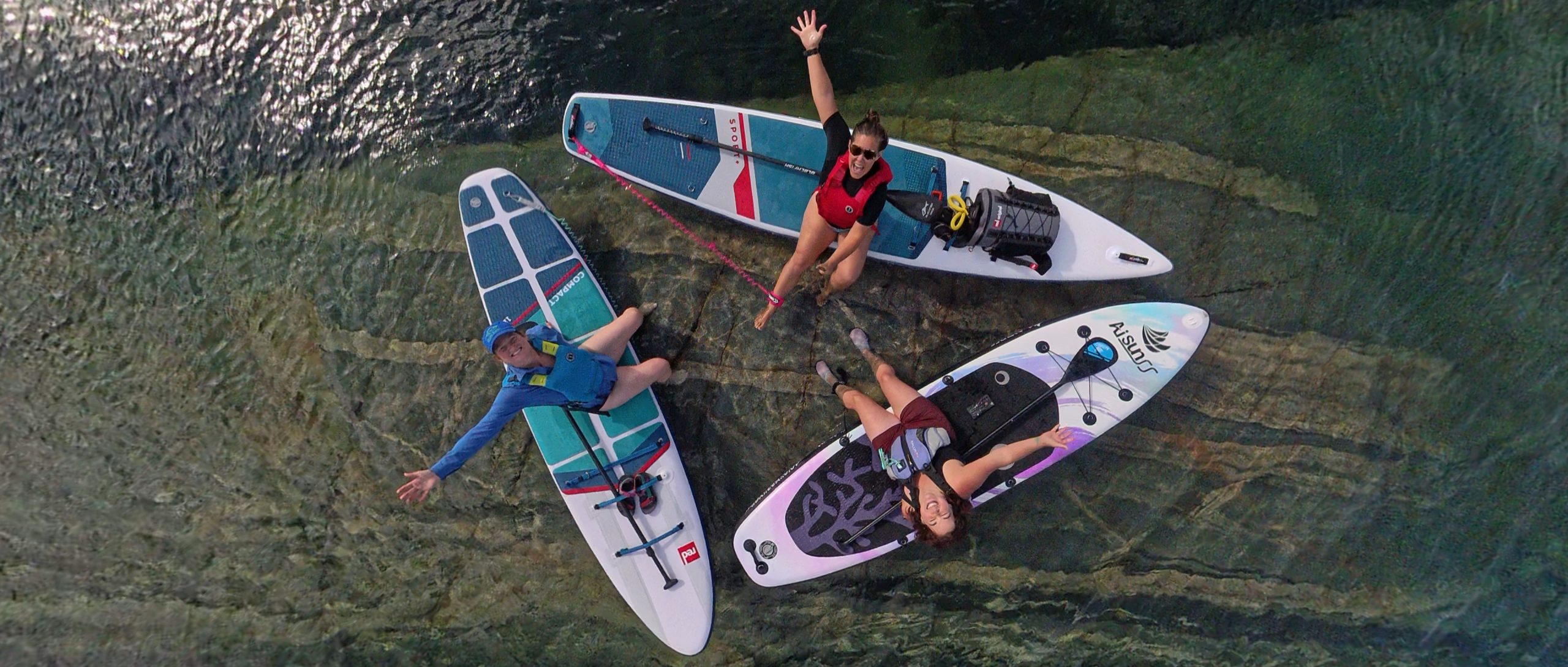
My Current Paddleboarding Camera Setup
One of the questions I get asked most often is:
“What camera do you use?”
The truth is, I don’t rely on just one. Different cameras excel at different things, so I choose the one that best fits the paddle, the conditions, and the type of footage I’m hoping to capture.
Below is the gear I currently use and recommend. Throughout this guide, I’ll explain why I choose each camera, how I mount it, and when I reach for it.
Action Camera
Current camera: GoPro (or DJI Osmo Action)
I use it for:
- Hands-free POV footage
- Action shots
- Underwater shots
- Good audio without a mic.
- Rougher water
My accessories:

Still photo from GoPro
360 Camera
Current camera: Insta360 (new Insta360 X6)
This has become my favourite camera for solo paddles.
I use it for:
- Group shots
- Board-mounted footage
- Portaging footage on backcountry paddle board trips
- Invisible selfie stick shots
- Drone-like shots when you can’t use a drone
My accessories:
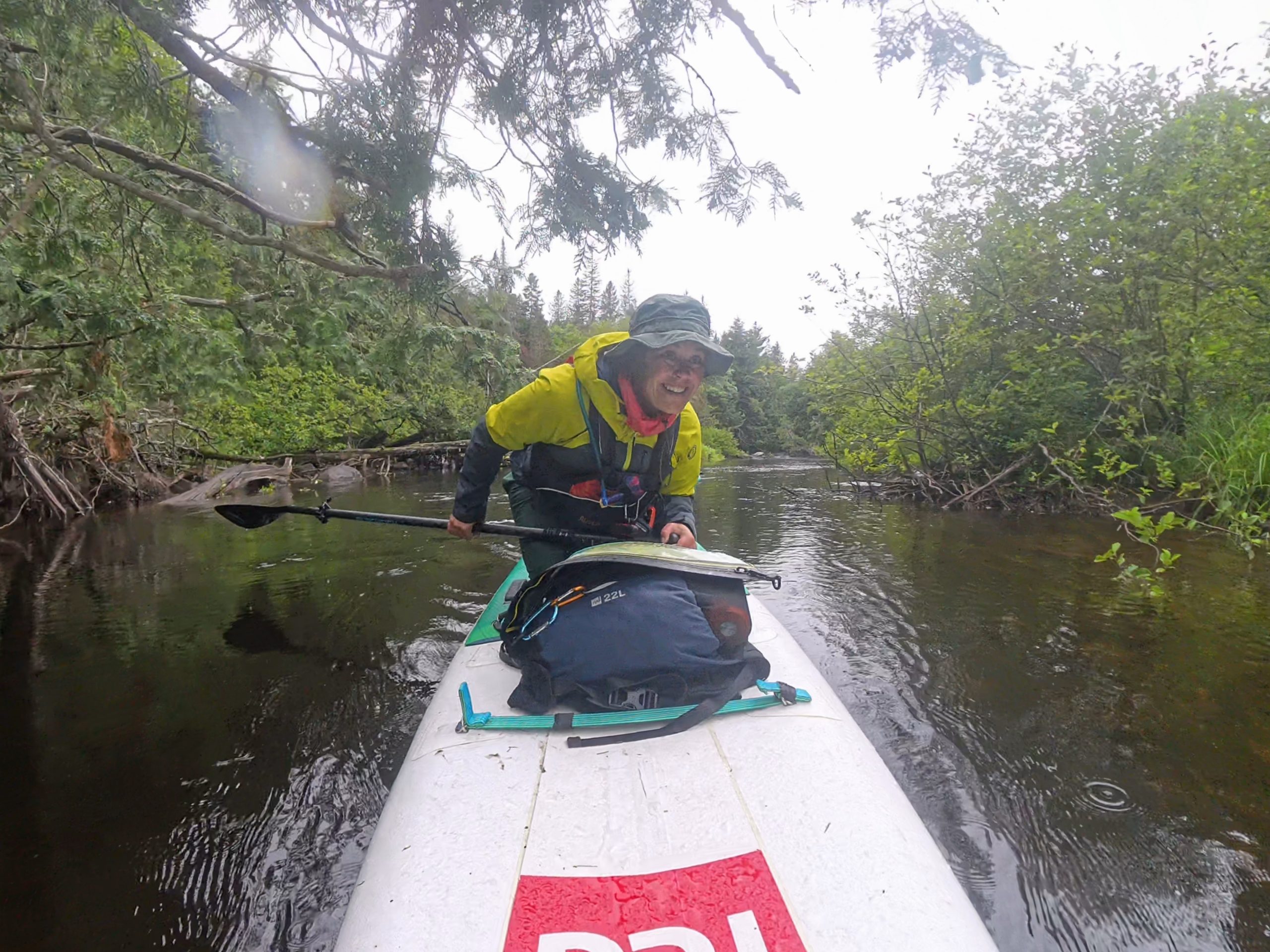
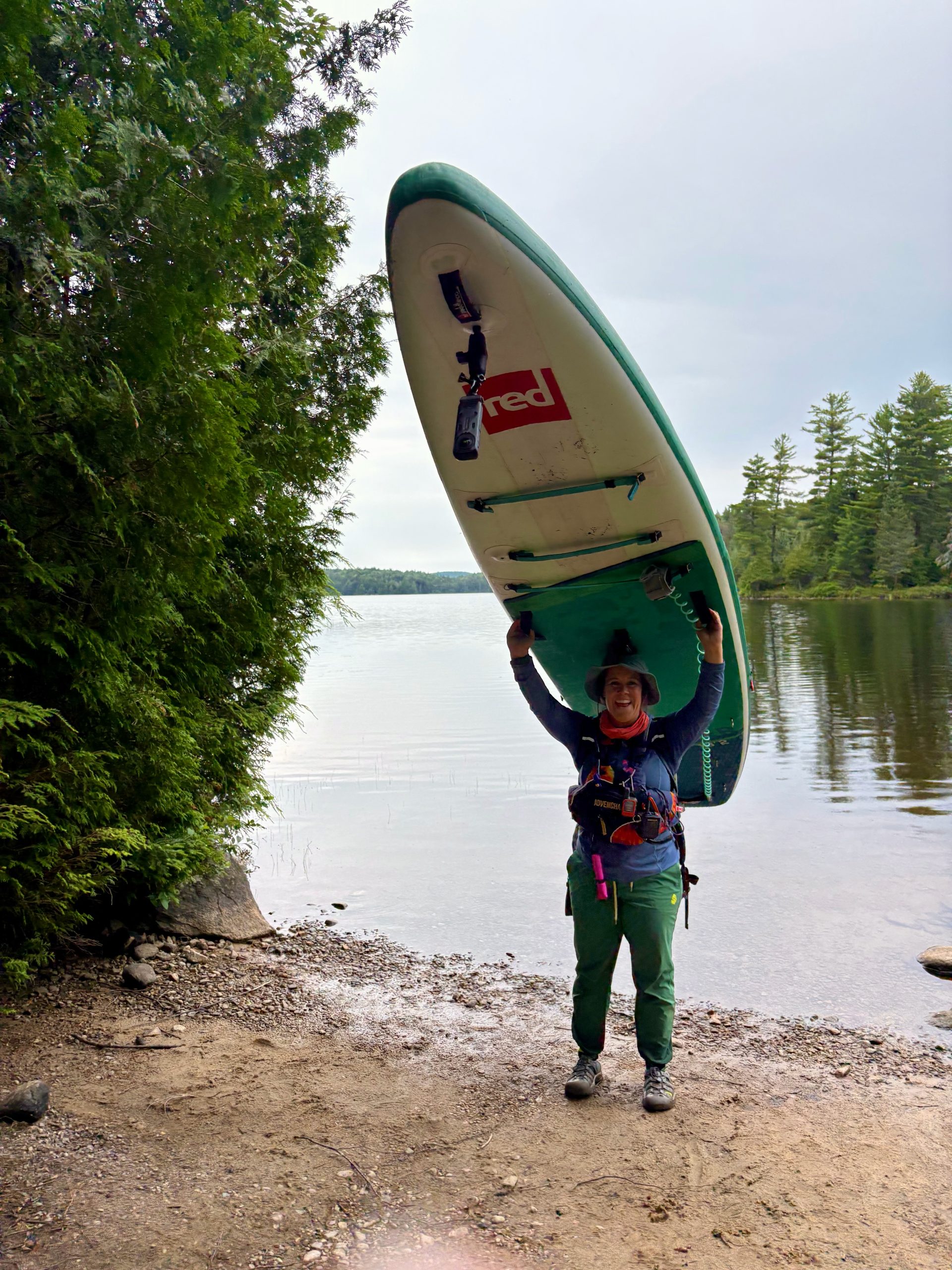
Insta360 mounted to the front of my board
Drone
Current drone: DJI Neo 2
The DJI Neo has become one of my favourite additions because it’s incredibly quick to deploy and easy to bring on paddling trips. Its palm takeoff, subject tracking, and lightweight design make it ideal for capturing unique aerial perspectives without carrying a large drone.
I use it for:
- Launches and landings
- Following me for hiking and sometimes paddling (it doesn’t do the best job of tracking while paddling, and it’s always risky launching from the water. When possible, launch and land on shore)
- Scenic overhead shots
- Quick establishing footage
My accessories:
- Spare batteries & Charging hub (I recommend buying this as a pack when you get the drone itself)
- Carrying case
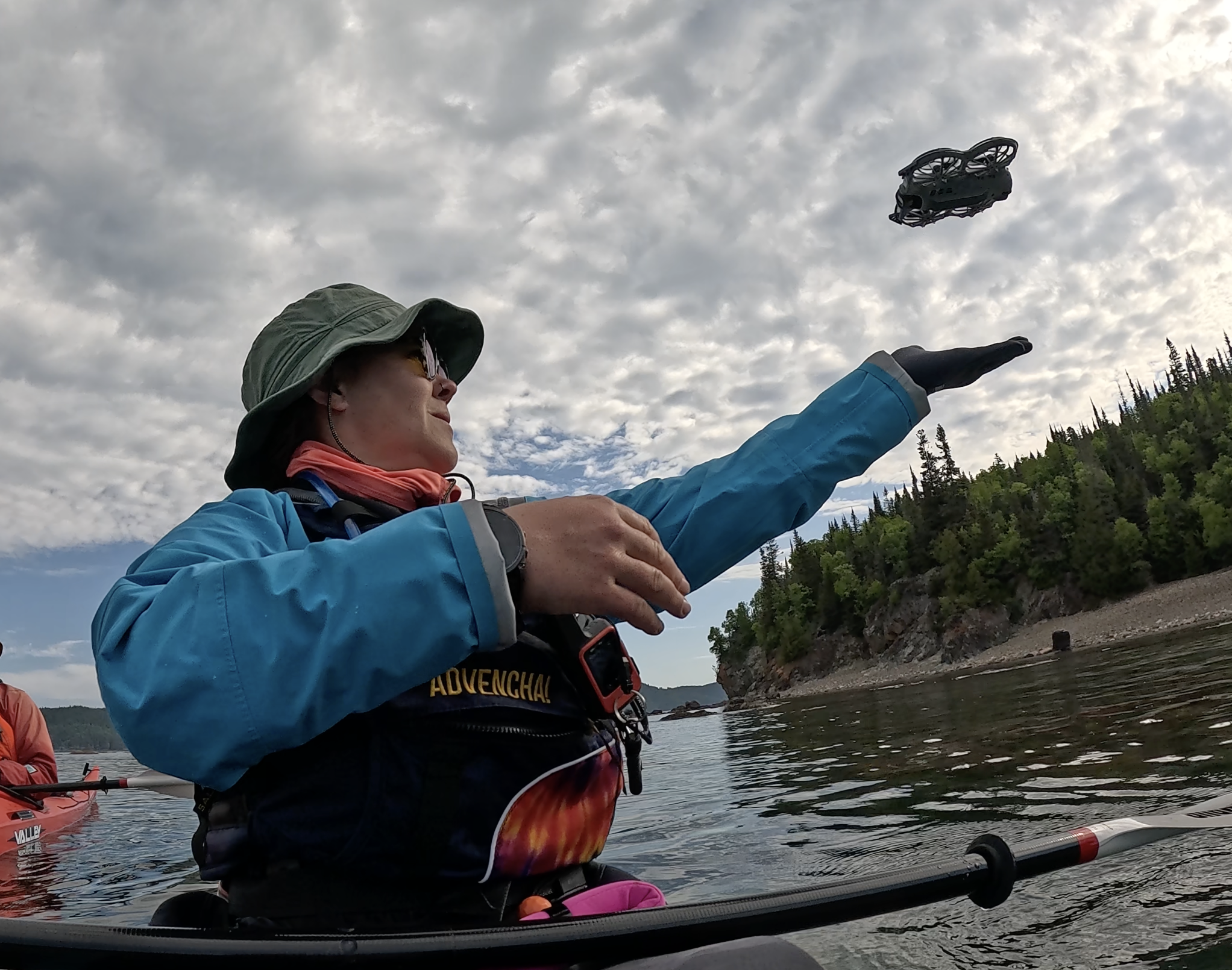
DJI Neo 2 landing in my palm
Phone
Even though I carry dedicated cameras, I still use my phone all the time.
Current Phone: iPhone 17 Pro
I use it for:
- Wildlife (zoom)
- Photos
- Quick short clips
My accessories:
- Floating tether
- Phone case dedicated to floating tether
- Tether Tab if your phone case doesn’t have a hole for tether
- Popsocket
- Power bank

Phone shot
🛍️ 📸 Shop My Camera Gear
Looking for the gear I use? I’ve linked my cameras, mounts, accessories, and other favourites above and throughout this guide, or you can find everything in one place here.
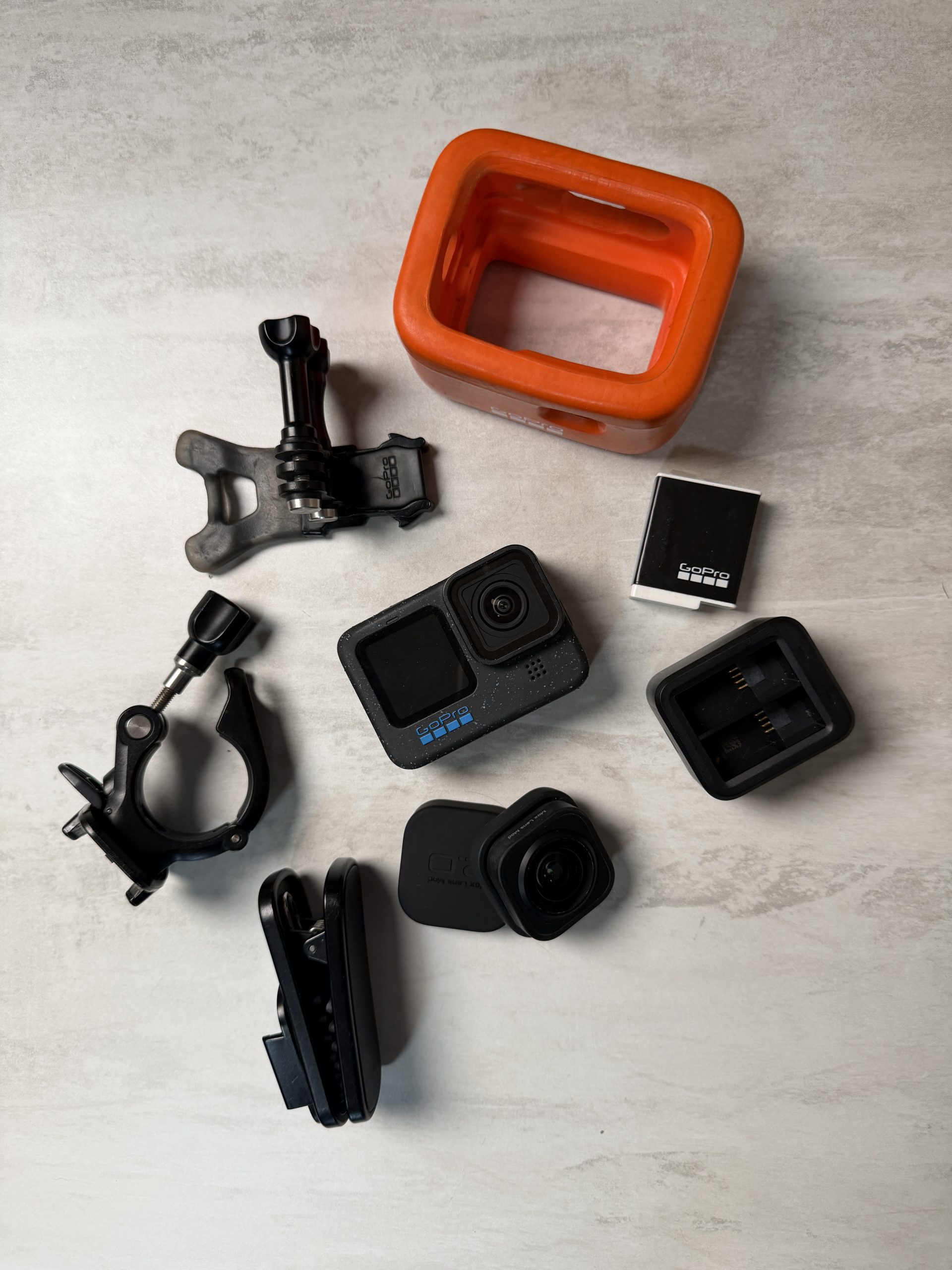
GoPro set up (all items listed above)
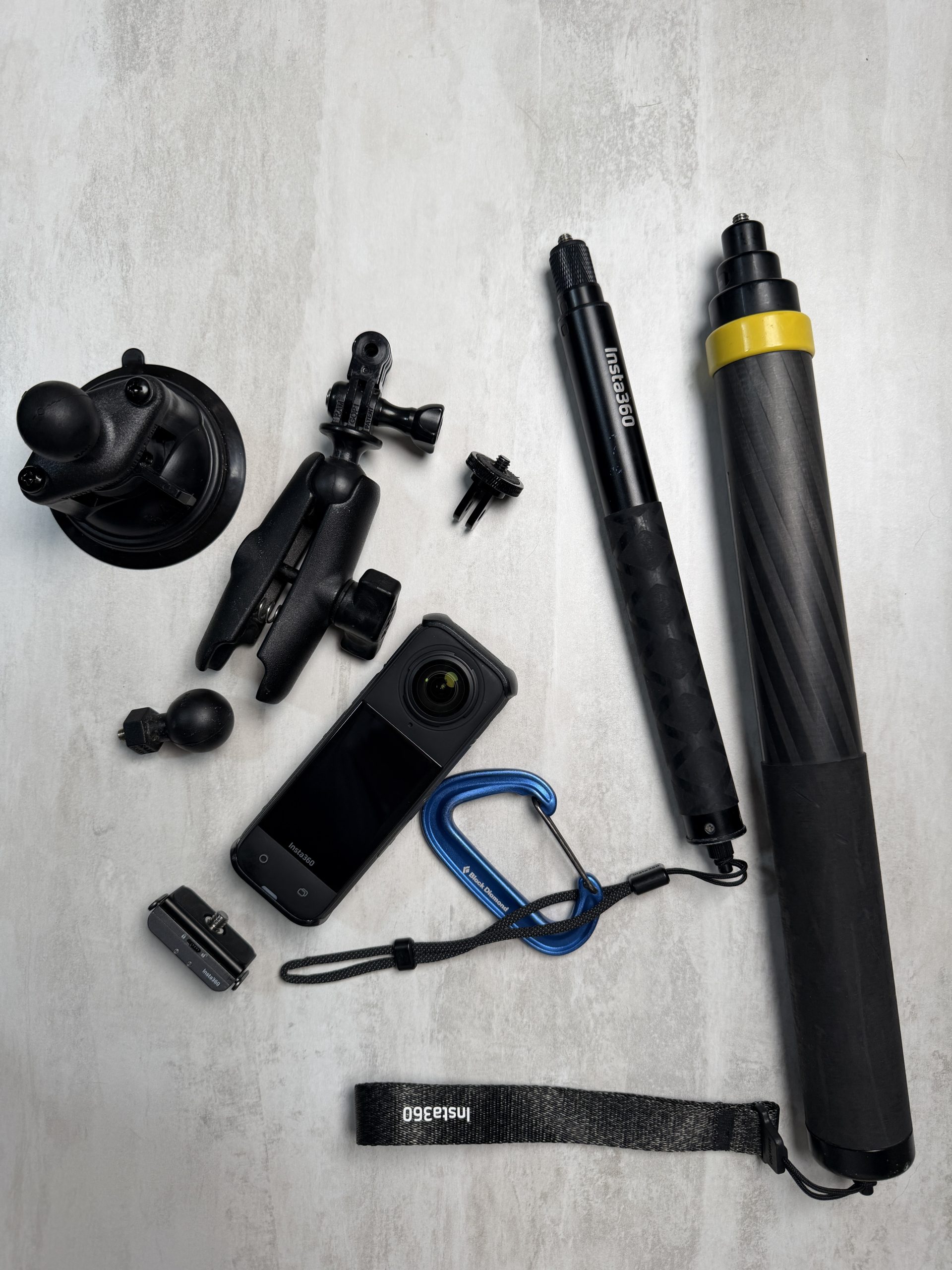
Insta360 set up (all items listed above)
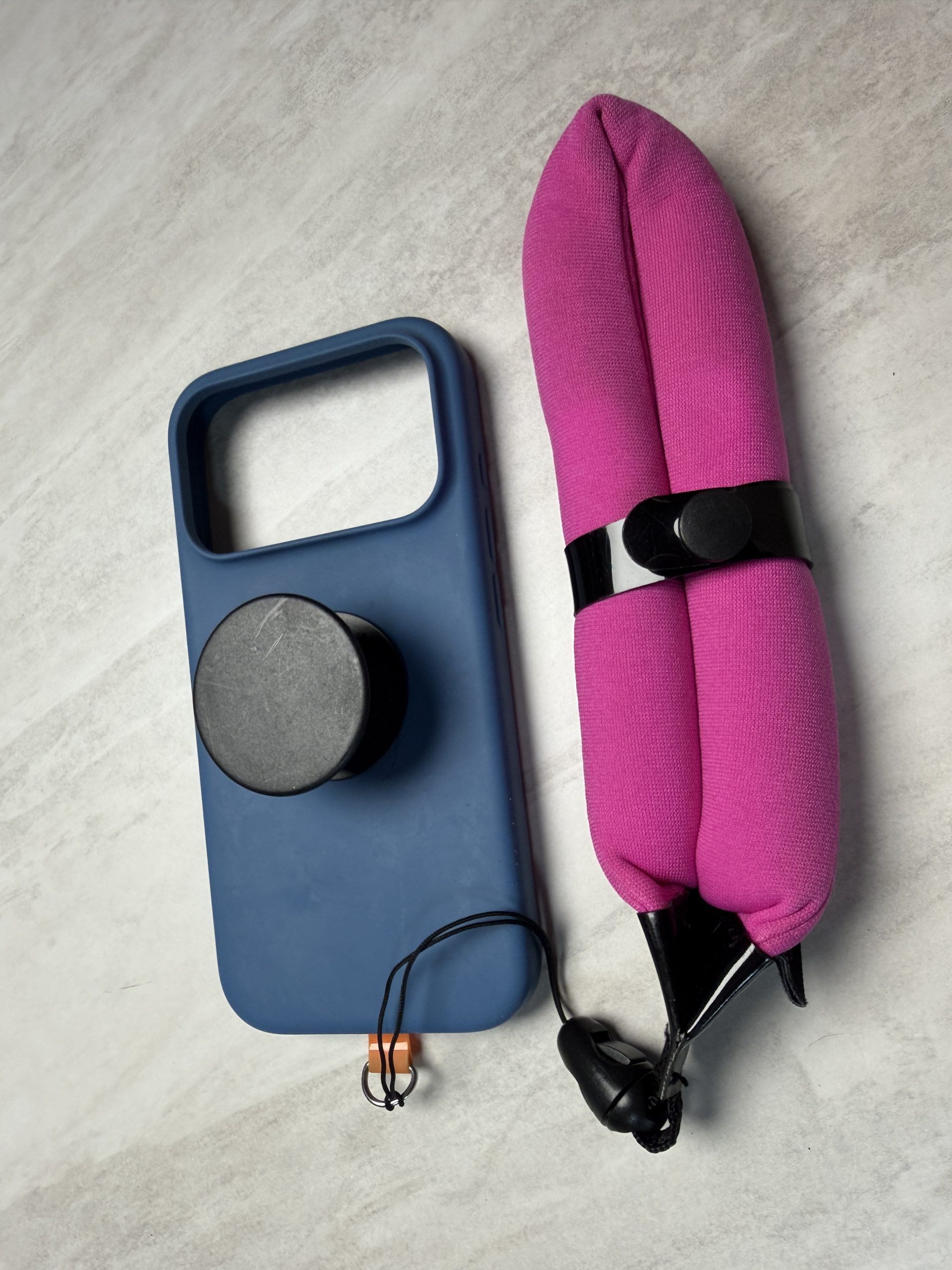
iPhone set up (all items listed above)
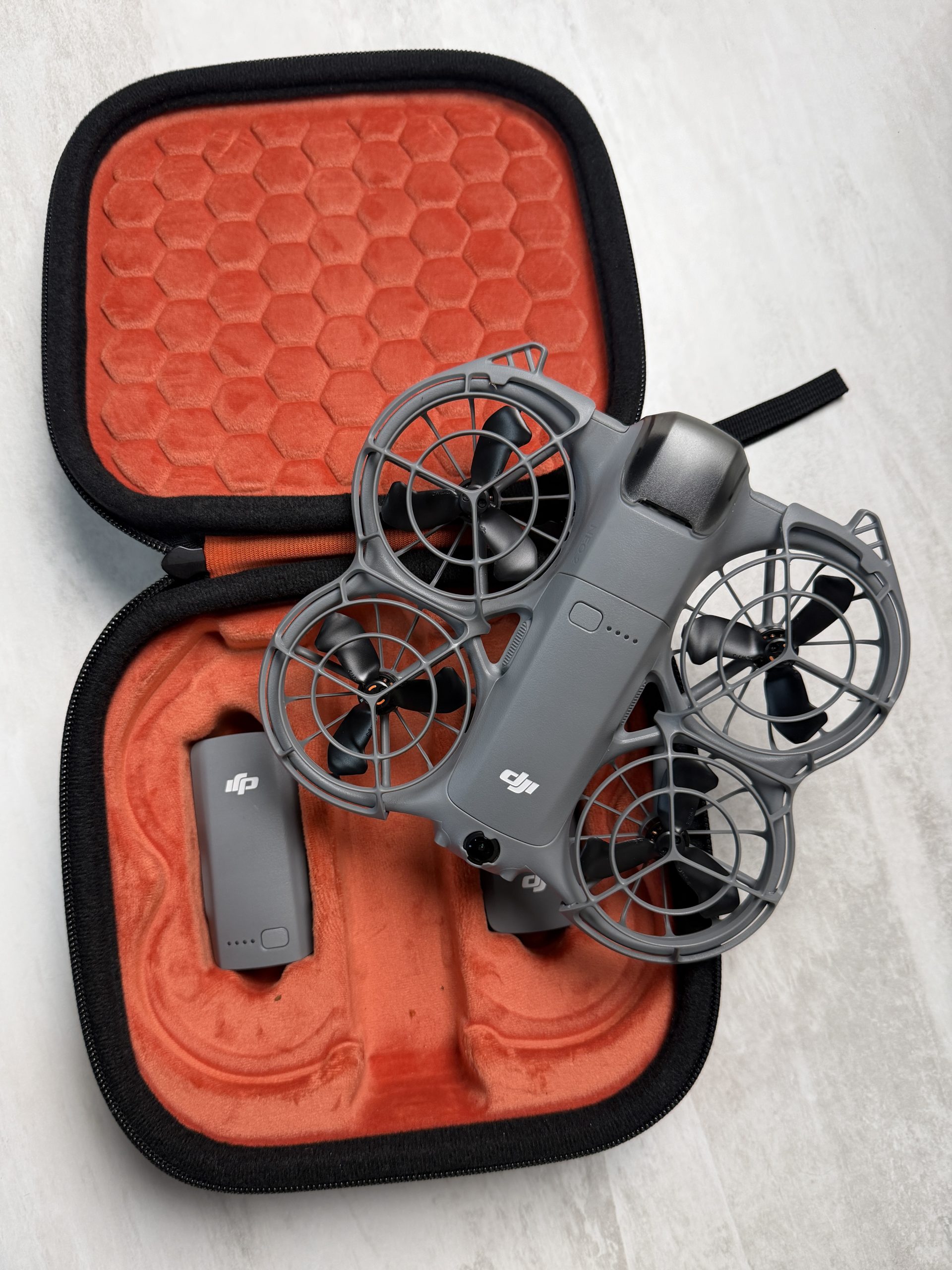
DJI Neo 2 set up (all items listed above)
Looking for personalized guidance?
I offer one-on-one Paddle Adventurer consultation sessions that cover paddling, backcountry trip planning, travel, content creation and more. Explore consultation sessions →
Tips for capturing videos and photos while paddle boarding
Start With What You Want to Capture
Before thinking about specific cameras or mounts, it helps to start with a simple question:
What do you want to capture from this paddle?
Your answer will shape everything else, from the type of camera you bring to how you mount it and how much effort you put into filming.
For many paddlers, that might include:
- The places you explore
- Wildlife or interesting details along the way
- The scale of the landscape from above
- Friends or group paddles
- The water conditions that day
- Your board, gear, or launch points
- A few moments you’ll want to look back on
Thinking about this ahead of time helps you decide what’s worth capturing and what can simply be enjoyed in the moment.
It’s also a good time to consider what camera gear you already own. In many cases, the best place to start is with what you’re comfortable using, whether that’s a phone, an action camera, or something else, and building your setup around that.
Where you plan to share your photos or video can also influence how you shoot. Vertical clips are easy to view on phones, while horizontal shots work well for wider scenes and longer edits. You don’t need to commit to one or the other for an entire paddle; capturing a mix gives you more options afterward.
Being clear on this upfront helps you avoid overpacking gear or constantly adjusting your setup mid-paddle.
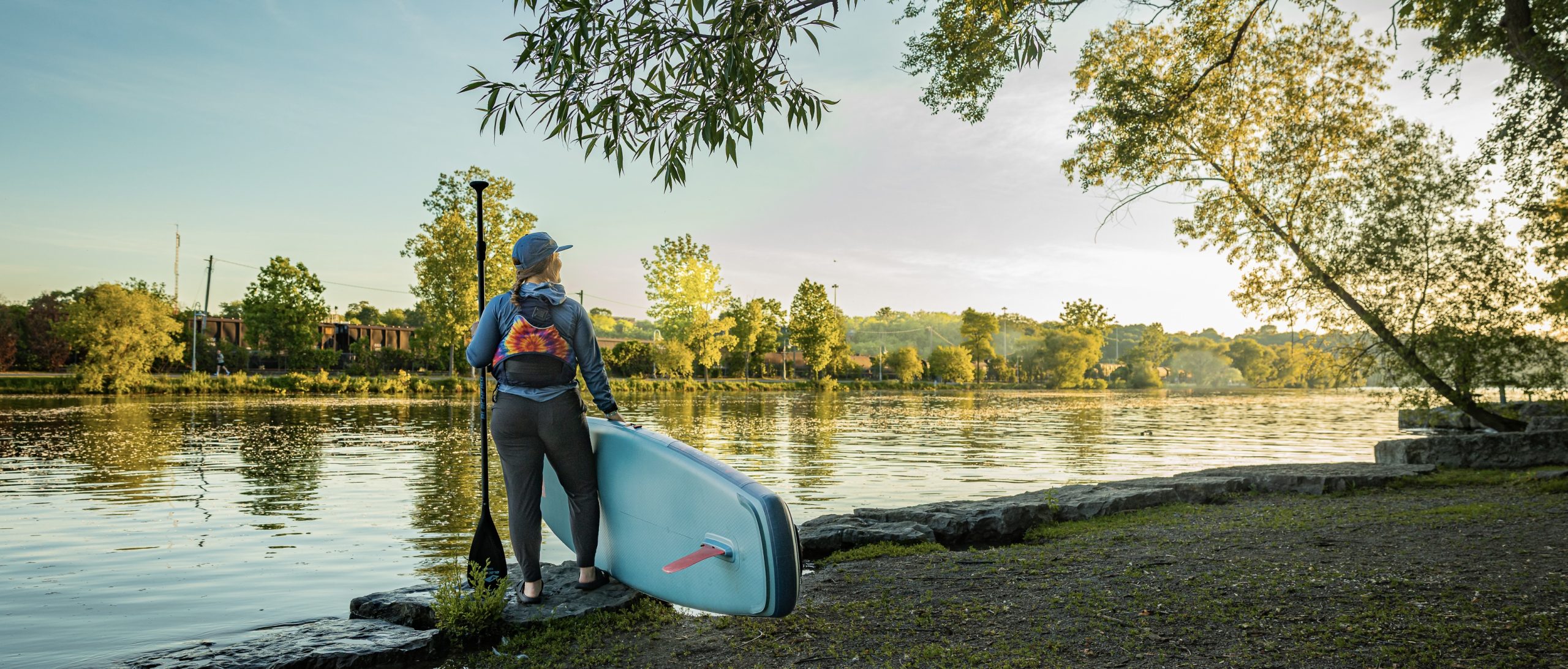
Photo taken by Tony F Photography for Paddle Adventurer PFD
What’s the Best Camera for Paddle Boarding Photography?
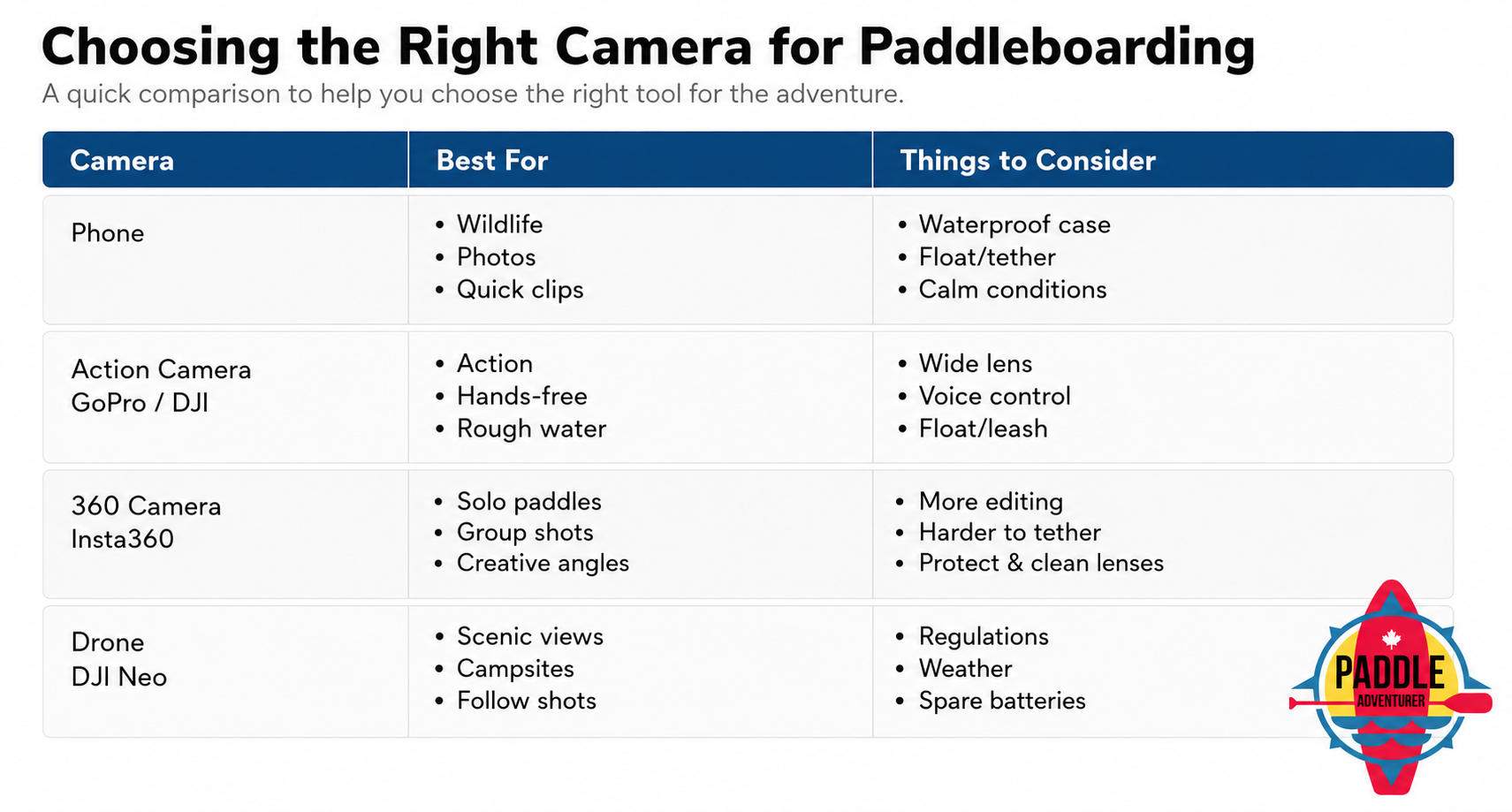
This is one of the most common questions I get, and the honest answer is: the best camera for paddleboarding depends on how you paddle, what you want to capture, and how simple you want your setup to be on the water.
There isn’t one perfect camera for everyone, but understanding the strengths and limitations of different camera types makes it much easier to choose what will work best for you.
Action Cameras (GoPro, DJI, and Budget-Friendly Options)
Action cameras are a popular choice for paddleboarding because they’re designed for movement, water, and changing conditions.
Higher-end action cameras, such as GoPro and DJI, tend to stand out for:
-
Strong image stabilization
-
Better audio in windy or splashy conditions
-
Reliable performance over longer paddles
-
A well-developed ecosystem of mounts and accessories
These cameras are a solid choice if you paddle often, travel with your gear, or want video footage that holds up well across a range of conditions.
One important thing to keep in mind is that most action cameras use a wide-angle lens. This makes them great for capturing close-up scenery, movement, and immersive views, but it also means they’re not ideal for photographing wildlife or subjects that are far away. Animals, distant shoreline details, or anything you’re not close to will appear much smaller in the frame than you might expect.
More budget-friendly action cameras (such as Akaso and similar brands) can still work well, especially if you’re just getting started or paddling in calmer conditions. They’re often more affordable and capable of capturing memories without a big upfront investment.
The main trade-offs with lower-cost action cameras are usually:
-
Less effective stabilization
-
Softer image quality
-
Fewer mounting or accessory options
-
Less consistency in tougher conditions
If you’re paddling regularly or want a setup you can rely on in different environments, spending more on a higher-end action camera can be worth it. If you’re paddling occasionally or staying close to shore, a budget option may be more than enough.
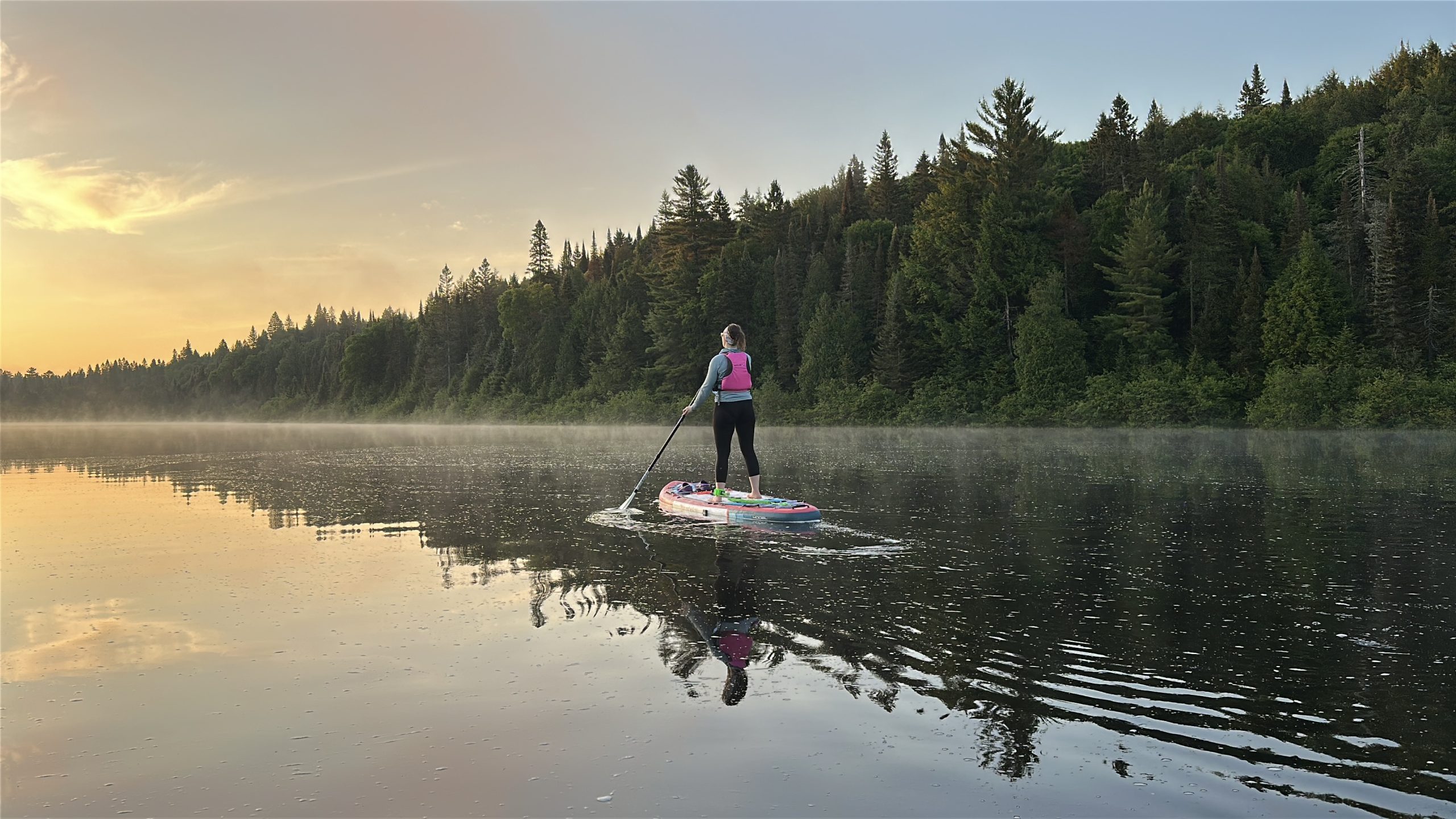
iPhone 17 Pro photo
Using Your Phone
Your phone can absolutely work for paddleboarding photography, especially for photos and short clips.
Phones tend to work best when:
-
Conditions are calm
-
You’re stopping to take photos
-
You’re using a waterproof case and a floating attachment
- You want to capture wildlife or details that are farther away
They’re convenient and familiar, but they do require more care on the water and aren’t always ideal for hands-free or movement-heavy shots.
360 Cameras (Insta360)
360 cameras, particularly from brands like Insta360, have become increasingly popular for paddleboarding — and for good reason.
Why 360 cameras work so well on the water:
-
You don’t need to aim or frame while paddling
-
One clip captures everything around you
-
They’re ideal for solo paddlers
-
You can choose your angles later during editing
Both 360 cameras and action cameras are designed to be waterproof, which makes them well suited for paddleboarding and other water sports.
That said, 360 cameras do come with some trade-offs that are worth understanding before choosing one.
Things to consider with 360 cameras:
-
Editing takes more time and a bit of learning
-
File sizes are larger
-
Low-light performance can be weaker
-
They’re less ideal if you want quick, ready-to-share clips straight from the camera
-
Mounting for specific angles can be trickier compared to traditional action cameras
-
Floatation and securing the camera requires extra thought due to their shape
-
The exposed lenses need more care to avoid scratches, water spots, or damage
Because the lenses are exposed on both sides, keeping them clean and protected — especially on the water — becomes part of the workflow.
If you enjoy editing and like having creative flexibility, a 360 camera can be an excellent tool. If you prefer a faster, simpler workflow with more straightforward mounting and handling, an action camera may feel more intuitive.
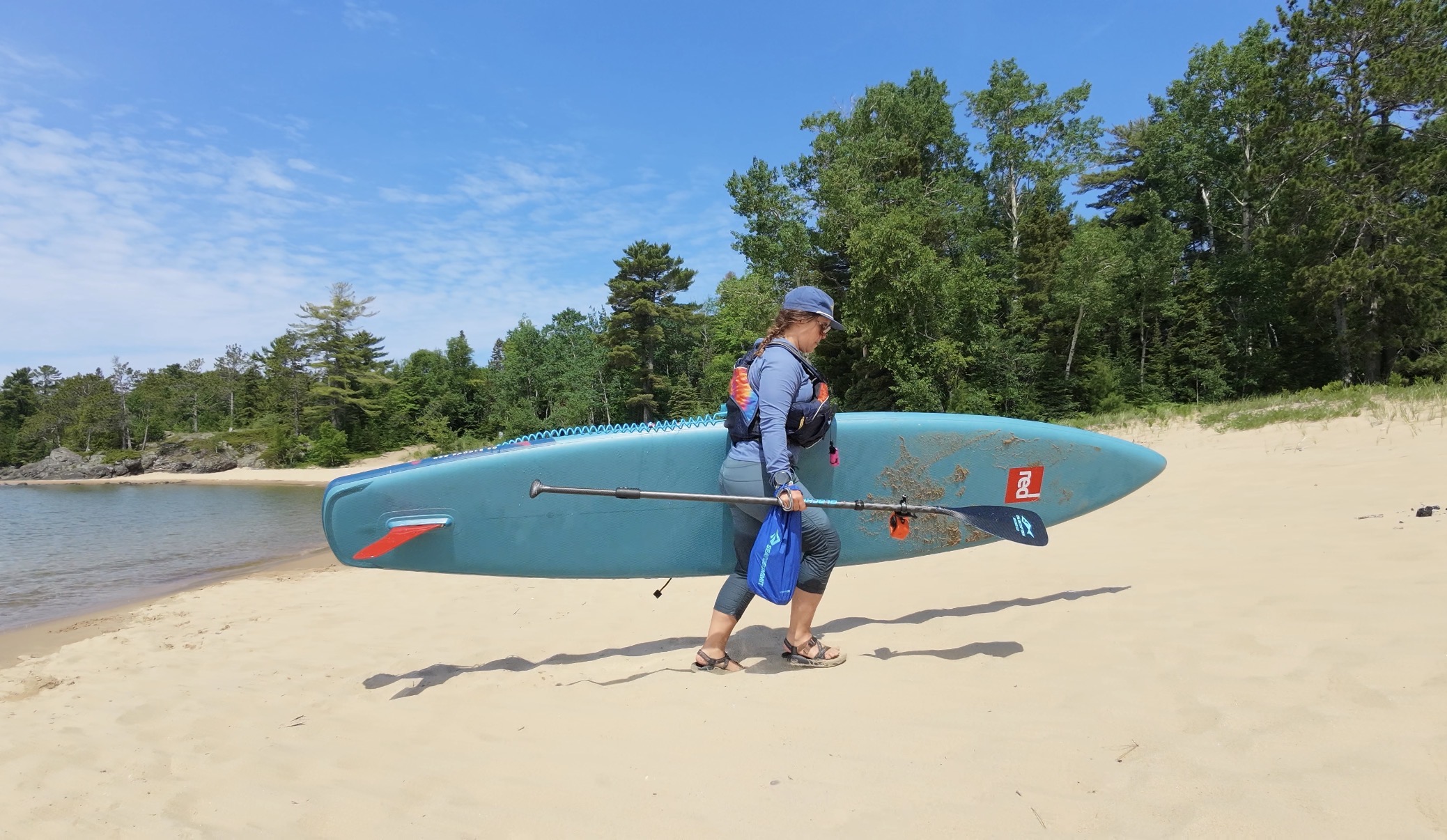
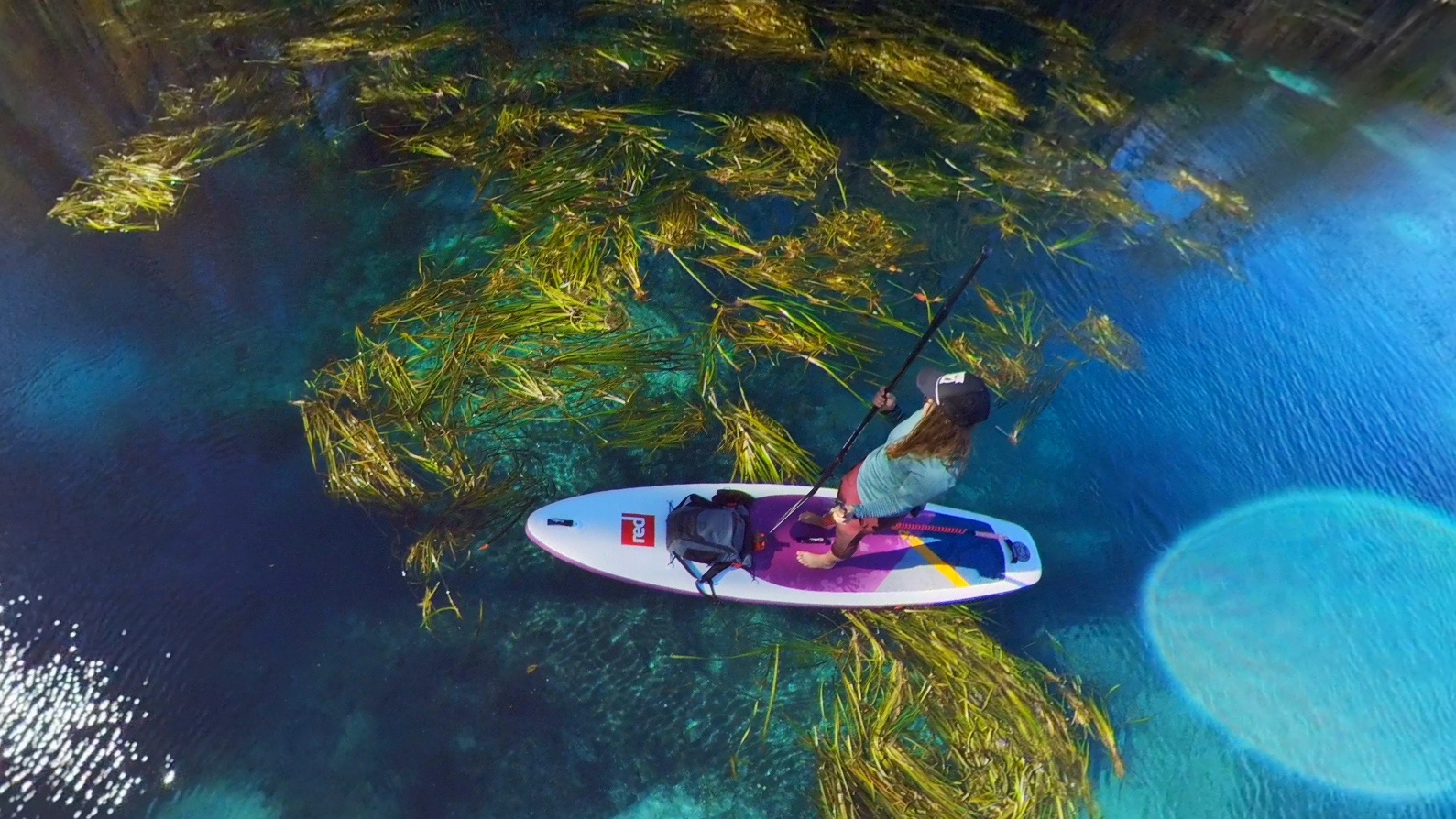
Screenshot from DJI Neo 2 following me
Drones
A drone won’t replace an action camera or phone, but it adds a perspective that nothing else can.
I use my DJI Neo for:
- Launches and landings
- Establishing shots
- Following shots
- Campsites
- Showing the scale of the landscape
Because it’s small and quick to launch, it’s become a regular part of my camera kit for paddling trips when I’m not in parks or restricted areas.
A Simple Way to Decide
Rather than searching for the “best” camera overall, focus on choosing a camera that:
-
Feels comfortable to use on the water
-
Matches the conditions you paddle in most often
-
Fits how much time you want to spend filming or editing
-
Can be mounted securely and floats if dropped
The best camera for paddleboarding is the one that fits your paddling style and gives you confidence in your setup.
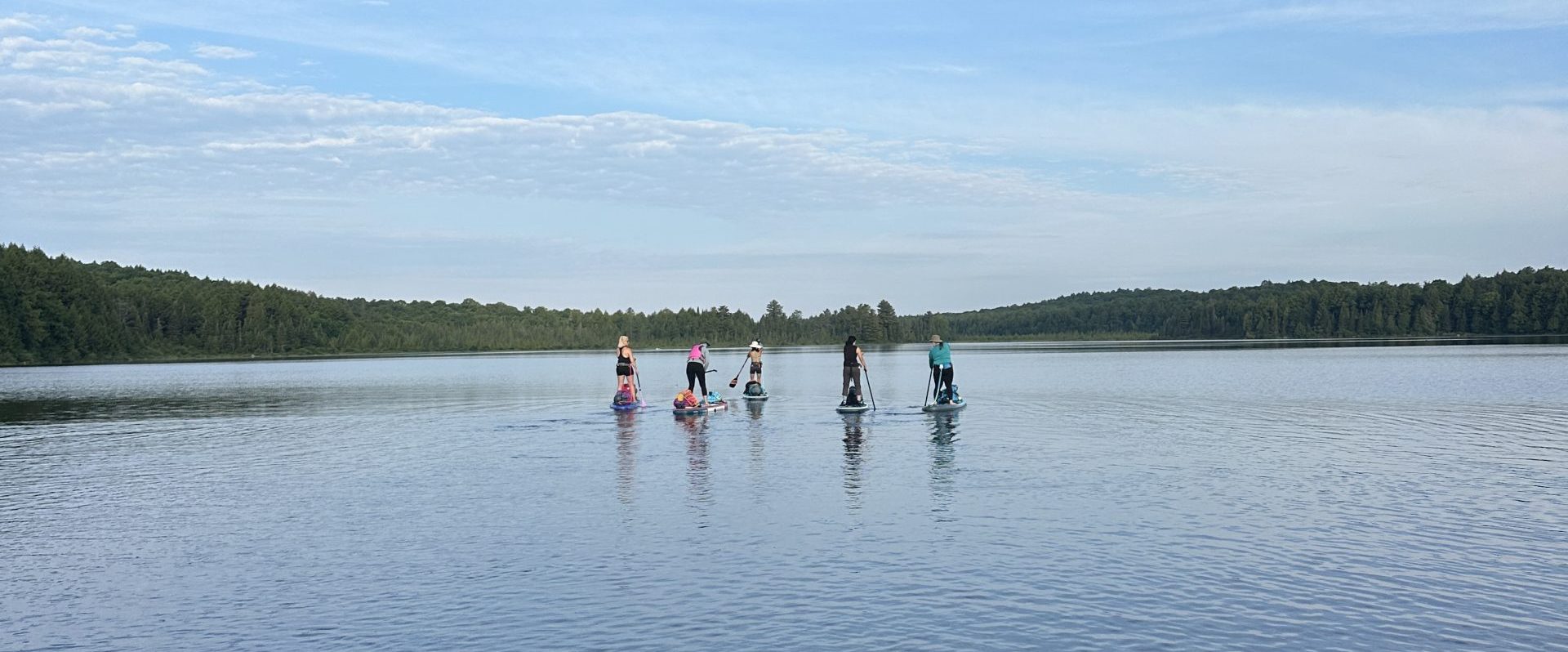
iPhone 17 Pro photo taken on one of my backcountry paddle board trips
Camera Mounting Basics for Paddleboarding
Once you’ve chosen a camera, how you mount it, how you secure it, will have the biggest impact on the shots you get and how confident you feel using it on the water.
There’s no single “best” mount. The right option depends on what you want to capture, how often you want to adjust your camera, and whether you’re paddling solo or with others.
Board-Mounted Cameras
Mounting a camera directly to your paddleboard is one of my favourite ways to capture steady, hands-free footage. It’s also one of the safest ways to secure your camera on the water since it stays attached to your board rather than being held in your hand.
Mounting Options
Not all paddleboards are designed the same when it comes to mounting cameras.
Some boards, like Red Equipment boards, include a built-in M6 threaded mount on the deck. Others use a GoPro-style quick-release mount, making it easy to attach an action camera or compatible accessory.
If your board doesn’t include either option, don’t worry. I’d recommend either:
- A heavy-duty RAM Mounts suction cup
- An adhesive mount that’s compatible with your board
You can find the mounting options I personally use here.
Why Board Mounts Work Well
- Stable footage while paddling
- Great for scenery and forward-facing shots
- Hands-free once set up
- Camera stays attached to the board, reducing the risk of drops
Things to Keep in Mind
- Board mounts create a fixed angle (unless you’re using a 360 camera).
- With traditional action cameras, you’ll want to decide whether you’re filming vertically or horizontally before launching.
- Once you’re on the water, it’s much harder to adjust your framing.
Board-mounted setups work best when your camera supports voice activation or Quick Capture. Being able to start and stop recording hands-free means you don’t have to keep bending down to reach the camera or leave it recording for long periods. Otherwise, you’ll often come home with far more footage than you actually need.
Why I Love 360 Cameras on Board Mounts
This is one area where 360 cameras really shine.
Because they capture everything around them, you don’t have to worry about framing or camera orientation while you’re paddling. Simply mount the camera, start recording (or use voice commands if available), and choose your framing and orientation later during editing.
If you’re mounting a 360 camera on your board, adding a little height helps create a more balanced perspective and prevents the board from dominating the frame. I recommend keeping the camera no more than about 6 inches (15 cm) above the deck. Taller mounts, especially the invisible selfie stick, can introduce wobble, particularly in wind or light chop.
Personally, I don’t use a selfie stick when board mounting my 360 camera. Instead, I use low-profile RAM Mounts, which I’ve found to be much more stable and predictable on the water while still giving me the perspective I’m after. You can find my current mounting setup here.
Insta360 mounted to the front of the SUP with RAM Mounts
Body-Mounted Cameras (Chest, Head, and Bite Mounts)
Body-mounted cameras capture a first-person point of view and work well for immersive shots while keeping your hands free.
They’re useful for:
-
Natural paddling perspective
-
Short, intentional clips
-
Moments where stopping to film isn’t practical
Chest and head mounts offer a consistent viewpoint but limited flexibility once you’re moving. A bite mount, like those made by GoPro is another option that can work well for very brief clips. It allows hands-free, immersive shots and can be useful if your setup supports quick release, but it’s not ideal for longer filming since you can’t talk while using it and comfort varies. As with any body-mounted option, using a floating attachment is still important in case it’s dropped.
Overall, body-mounted setups work best when used selectively rather than as your main filming approach.
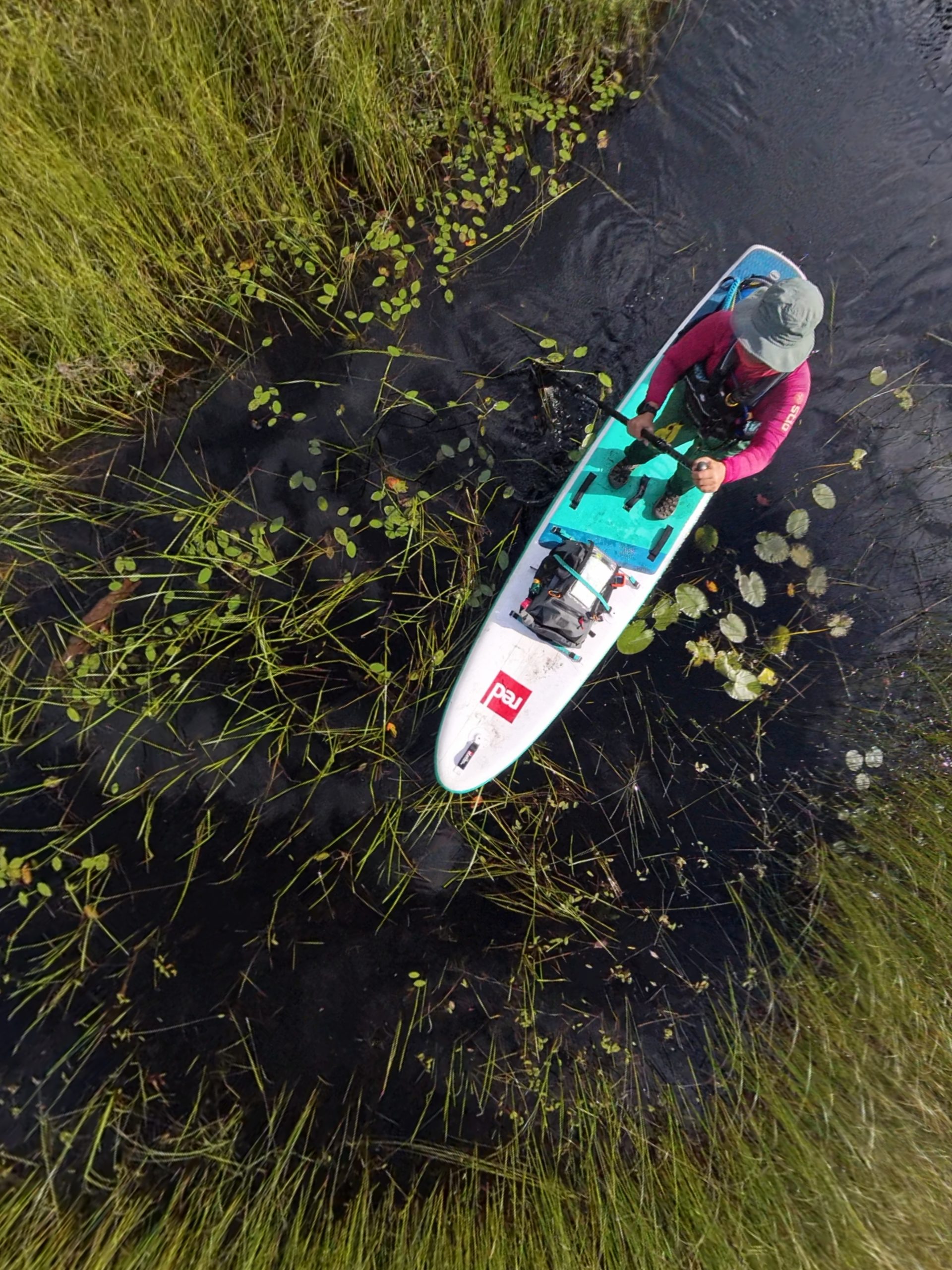
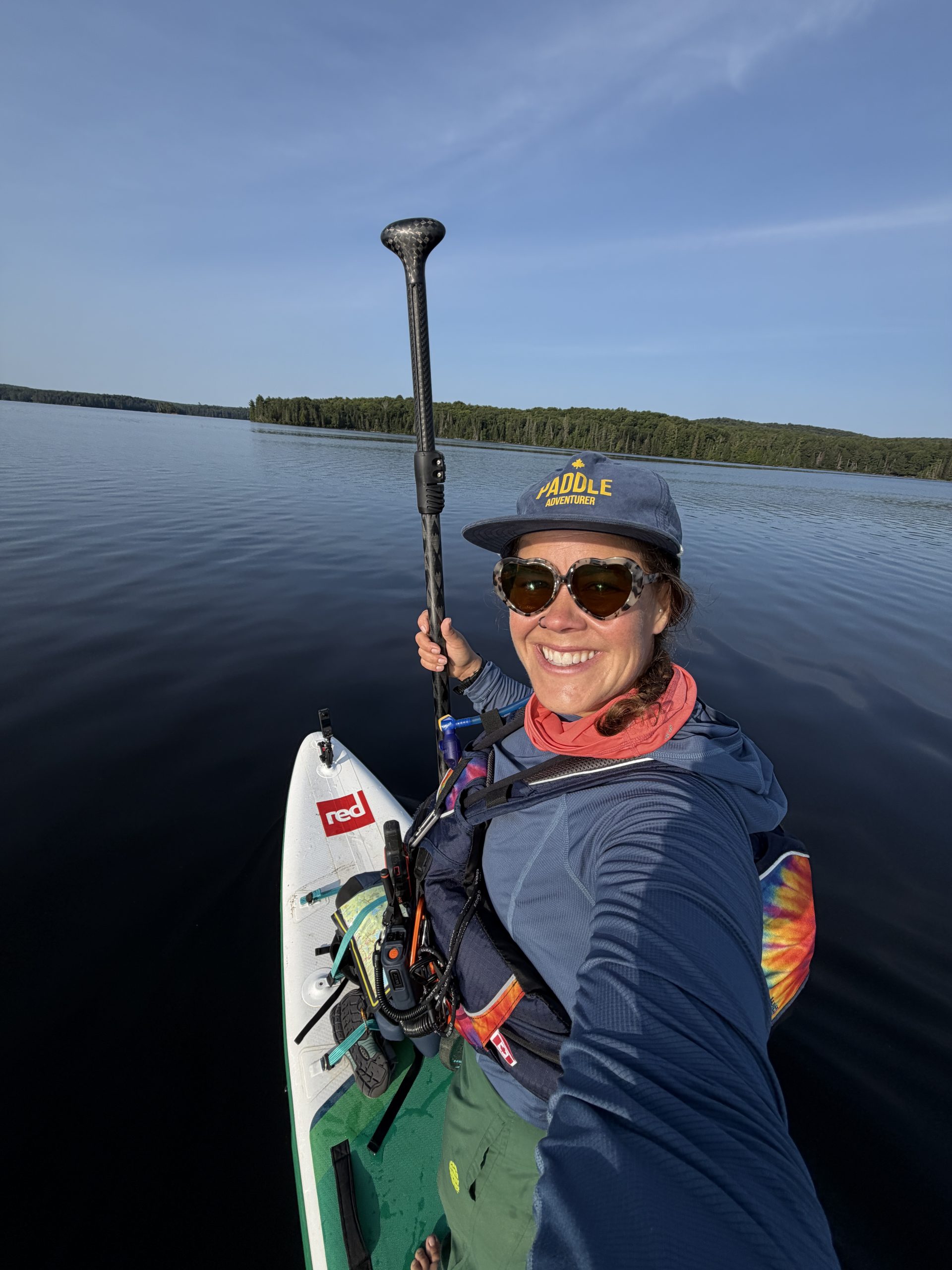
Tip: the above photo was captured using the Insta360 extended invisible selfie stick put down the front of my PFD. Be mindful that it’s not very secure and you can’t paddle with proper form. This quick mount is a great perspective when you can’t fly a drone.
Hand-Held and Pole-Mounted Cameras
Handheld mounts and floating poles are one of the most flexible options for paddleboarding.
Why they’re popular:
-
Easy to change angles and framing
-
Great for wide shots of yourself or group paddles
-
Simple to switch between vertical and horizontal
This approach works well if you’re comfortable briefly stopping or slowing down to capture a shot.
Because you’re handling the camera directly, floating and securing it becomes especially important.
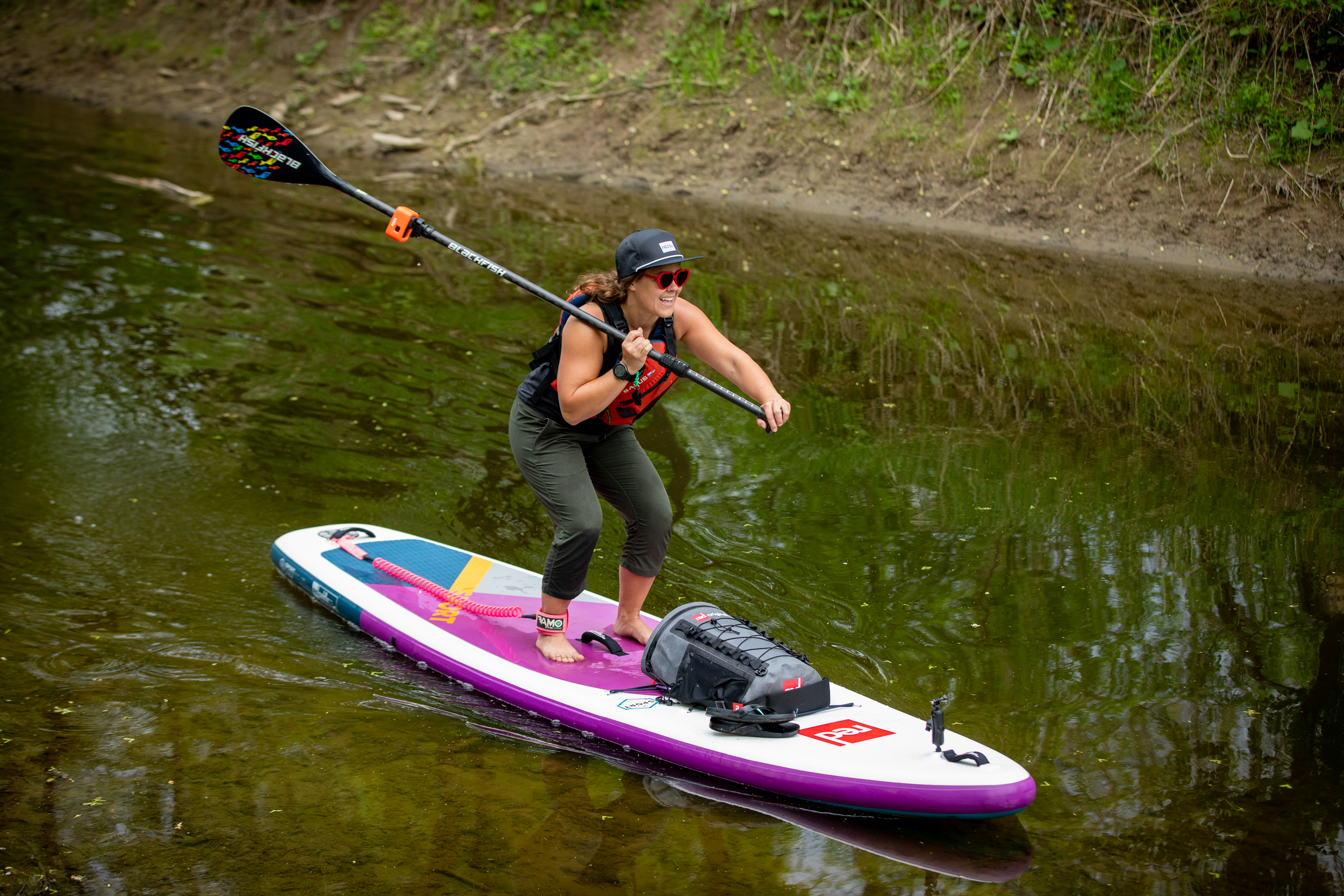
GoPro Pole Mount
A Mounting Mindset
Rather than trying to use every mount at once, choose one or two mounting options that:
-
Match what you want to capture
-
Feel comfortable and easy to manage
-
Work with the conditions you paddle in most often
You can always add complexity later, but starting simple makes it much easier to get consistent results.
Don’t Skip This: Securing and Floating Your Camera
No matter how you mount your camera, planning for drops is essential.
Water, balance shifts, and unexpected movement happen, even on calm days.
Key safety habits to build into your setup:
-
Use a floating handle, float case, or float attachment whenever possible
-
Add a leash or tether so the dropped gear stays attached
-
Test your setup in shallow water before heading out
-
Double-check mounts and connections before launching
This applies to action cameras, 360 cameras, and phones alike. Even waterproof cameras can be difficult to recover if they sink.
A secure setup not only protects your gear, but it also gives you confidence to focus on capturing shots instead of worrying about losing your camera.
Pro Tip
Before a bucket-list paddle, expedition, or vacation, spend an afternoon practicing with your camera close to home. You’ll quickly learn which mounts you like, what angles work best, and how your camera behaves on the water. It’s much better to figure that out on your local lake than on the adventure you’ve been dreaming about.
How to Get Shots of Yourself (Solo & Group Paddles)
This is one of the most common questions I get: How do you get photos and video of yourself while paddleboarding?
Whether you’re paddling solo or with others, the key is choosing a setup that gives you flexibility without making things complicated.
Solo Paddling
When you’re paddling alone, simplicity and efficiency matter.
Some of the most reliable approaches include:
-
Handheld or pole-mounted cameras for wide shots and flexibility
-
360 cameras if you want to capture everything without worrying about framing
-
Board-mounted shots when you’re okay with a fixed angle
For solo paddles, I find handheld or pole-mounted setups especially useful because they let you:
-
Change angles easily
-
Capture yourself and the scenery in one shot
-
Switch between vertical and horizontal without adjusting mounts
It’s often worth slowing down or stopping briefly to capture a shot rather than trying to film continuously while moving.
I’ve learned that some of my favourite photos weren’t planned, they happened because my camera was ready and easy to access.
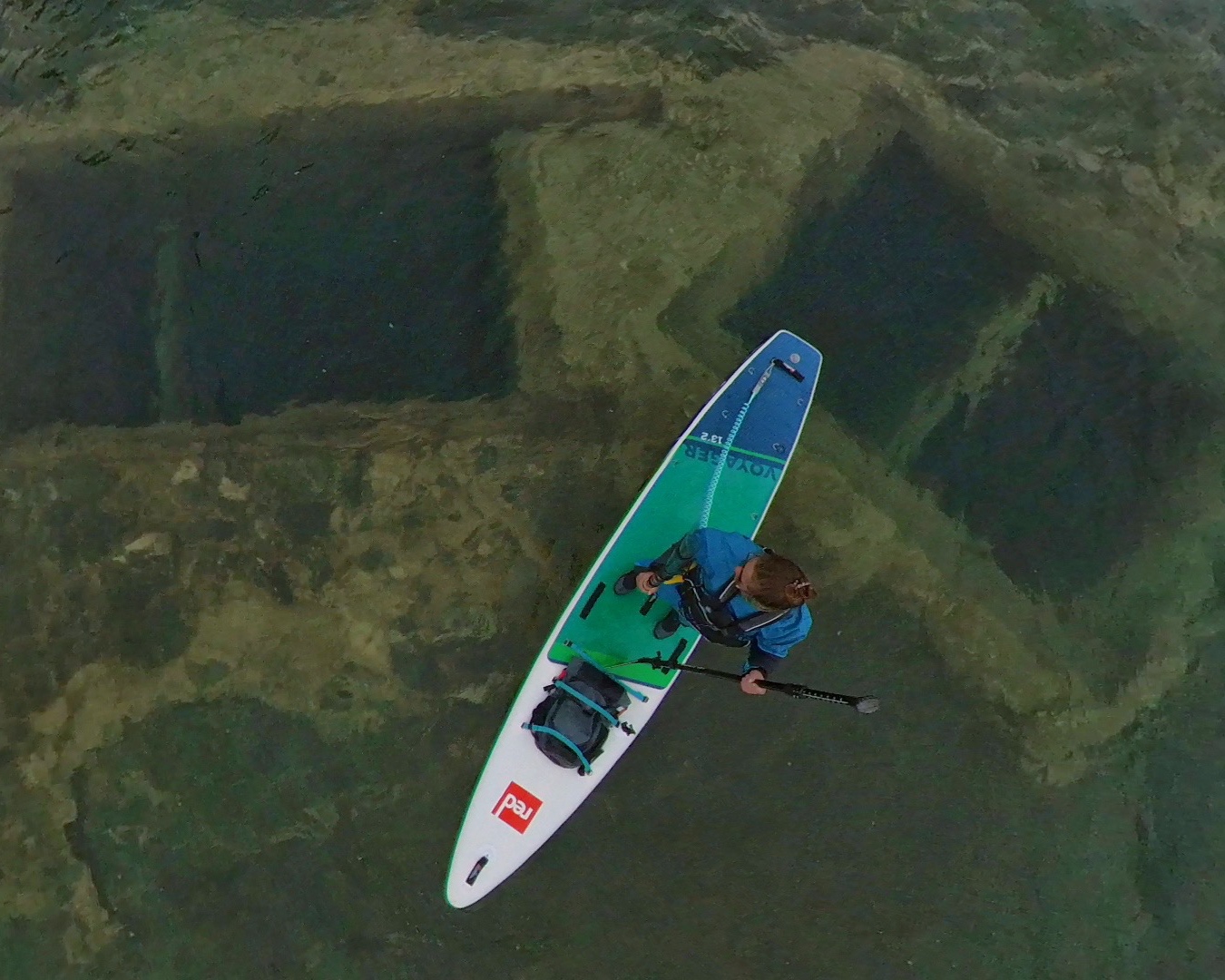
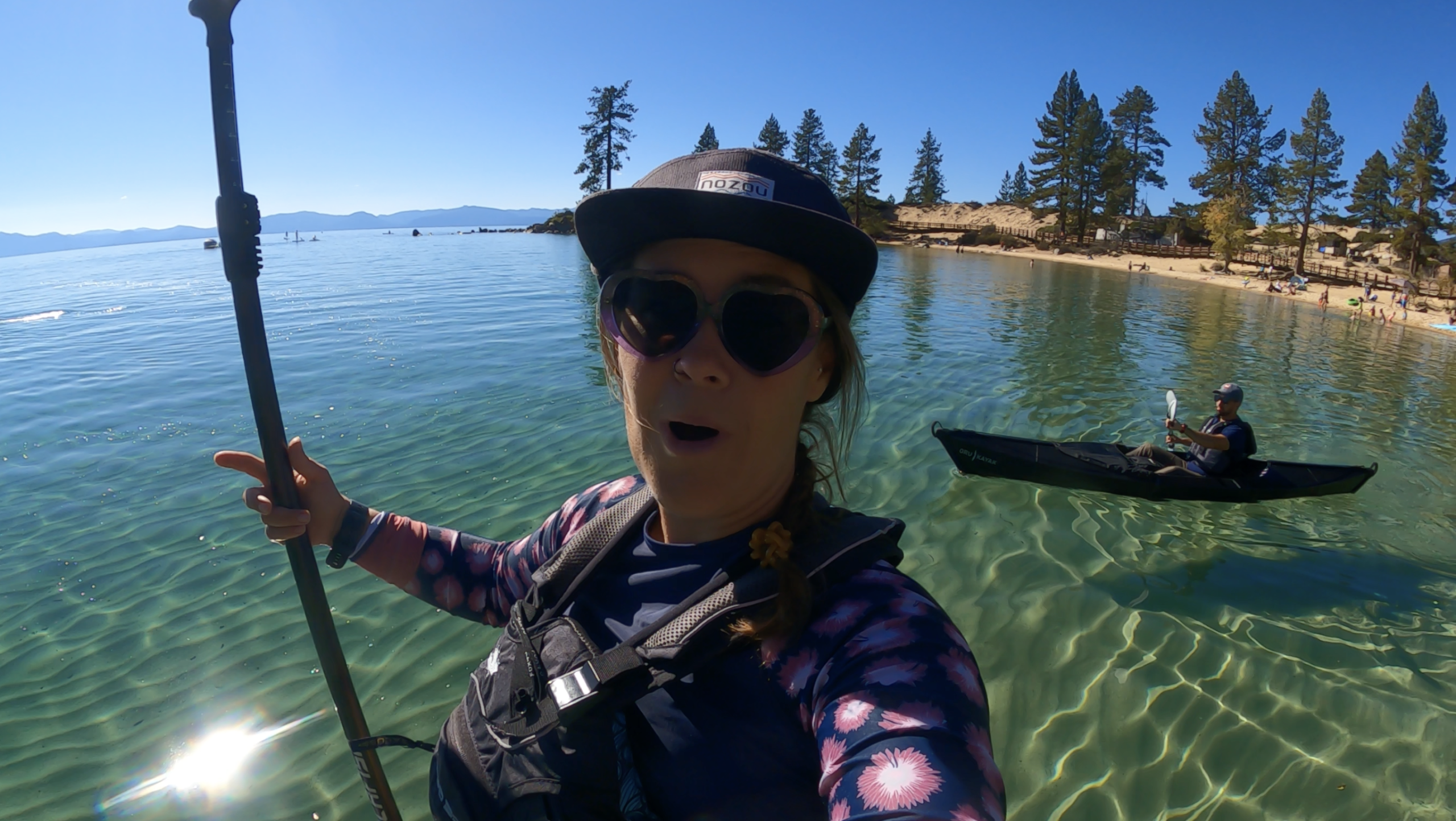
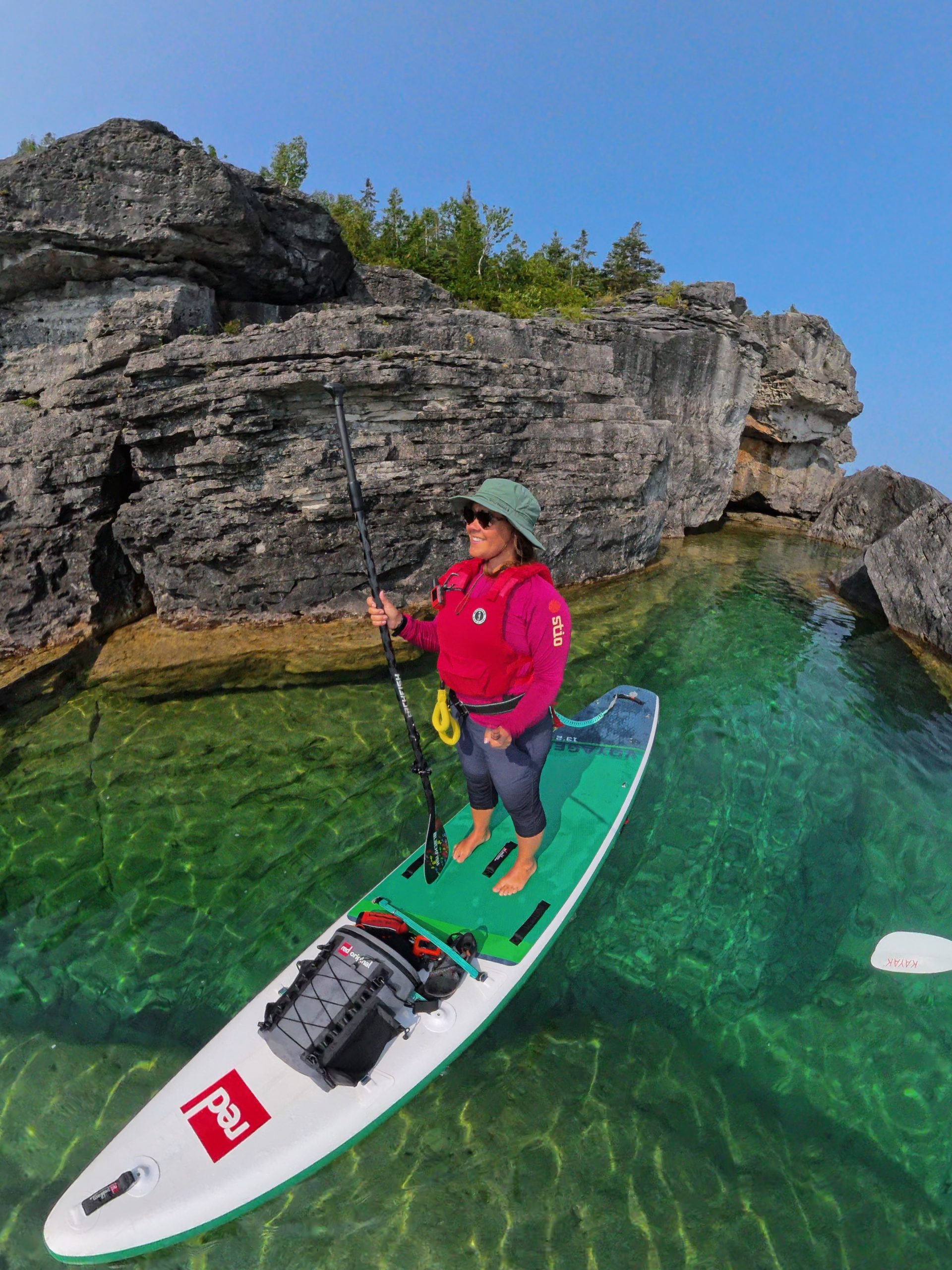
Screenshot of video filmed on GoPro with Ultra Wide Lens.
Group Paddles
When paddling with others, you have a few more options.
You can:
-
Take turns filming or photographing each other
-
Capture wide shots of the group moving together
-
Use a handheld or pole-mounted camera to include yourself in the frame
Group paddles are great opportunities for wider shots that show scale, spacing, and shared experiences, especially when conditions are calm.
If you’re using a 360 camera, mounting it on an invisible pole can work especially well for group paddles. It allows you to capture everyone at once without needing perfect framing, and the pole is removed from the shot during editing, creating clean, dynamic group footage.
A drone can also be a great option for capturing the entire group from above, especially when paddling through scenic waterways or camping together.
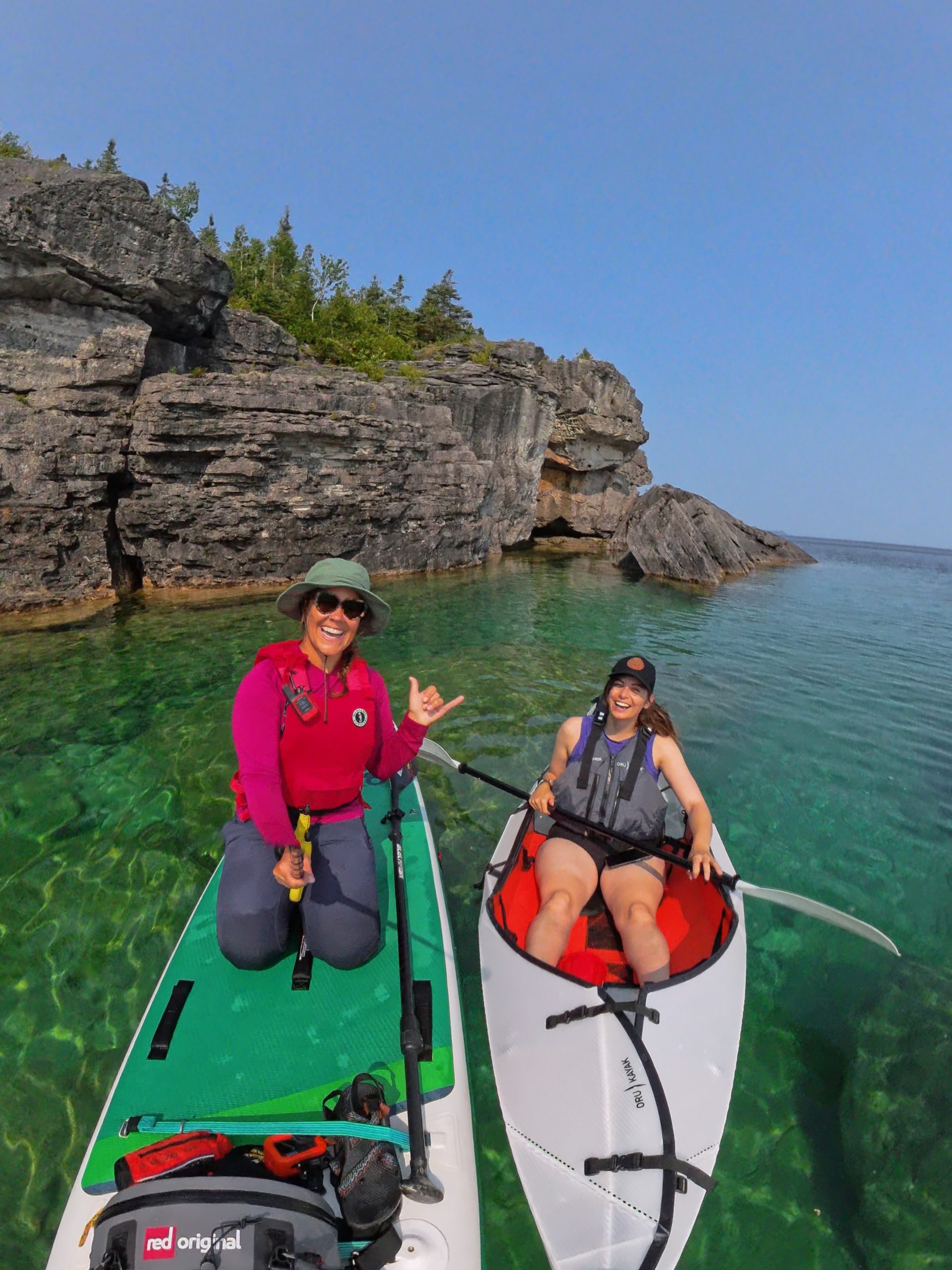
Insta360 with selfie stick
Framing Your Shots on the Water
No matter who you’re paddling with, framing matters.
A few things to keep in mind:
-
Action cameras have wide lenses, so subjects need to be closer than you might expect
-
Including part of your board or paddle in the frame helps add context and scale
-
Deciding whether you’re shooting vertical or horizontal will affect how your footage can be used later
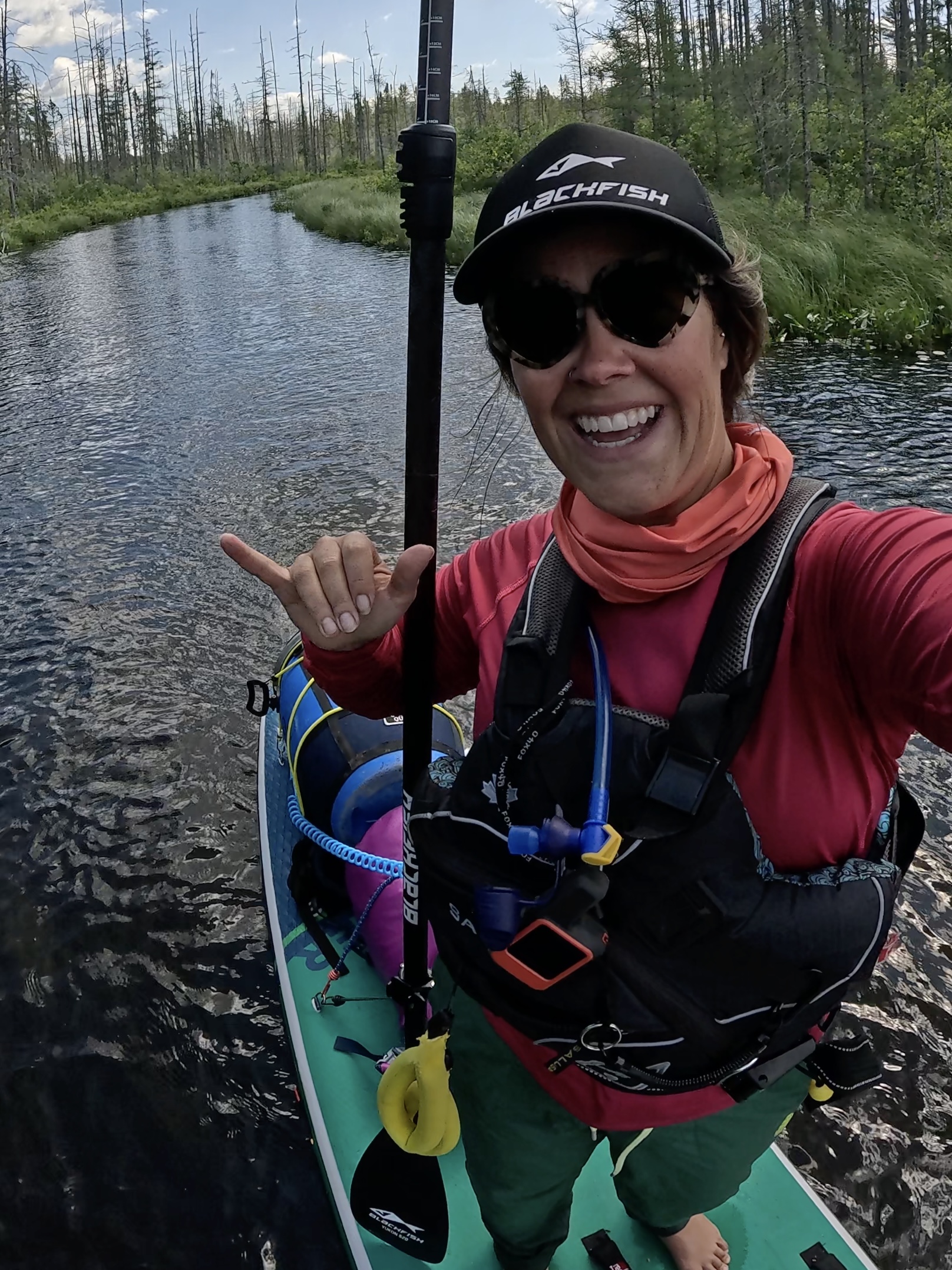
If you’re unsure, capturing a mix of vertical and horizontal shots gives you the most flexibility. Vertical framing works well for phone viewing and short clips, while horizontal framing is better for wide scenery and longer recaps.
If you’re using a phone, framing works a little differently. When possible, use the rear (main) camera rather than the front-facing camera for better image quality. Setting the rear camera to the 0.5 (ultra-wide) lens makes it easier to include yourself, other paddlers, and the surrounding scenery especially during group paddles or when holding the phone at arm’s length.
If you’re using a 360 camera, framing happens after the paddle rather than during it, but a few setup choices make a big difference in the final result. Keep the camera steady and level, and avoid placing your main subject directly on the stitch line (the seam between the lenses), which can cause distortion. Positioning the camera so the sun sits more to the side rather than directly in front can help balance exposure on bright days. Using an invisible selfie stick creates dynamic shots while keeping the mount out of view, and taking a moment to clean the lenses before and during your paddle helps ensure clear, seamless footage.
If you’re using a pole or handheld setup, experiment with distance and framing until you find what feels natural and gives you the result you’re looking for.
Keep It Intentional
You don’t need to capture everything.
For most paddles, a few well-timed clips or photos are more than enough:
-
A launch or early paddle shot
-
One or two wide shots of yourself or the group
-
An iconic moment, like a sunrise or sunset with a paddler, board, or shoreline in the frame
- An aerial shot (if you’re carrying a drone)
-
A moment you know you’ll want to look back on later
Some of my most memorable paddles have very few photos because I was simply enjoying being on the water. Don’t feel like every paddle needs to become a photo shoot.
Common Mistakes to Avoid
- Recording your entire paddle instead of capturing short, intentional clips.
- Forgetting to clean your lens, especially after splashes or rain.
- Mounting your camera too high, which often creates wobble and less stable footage.
- Skipping a float or tether. Waterproof cameras can still sink.
- Expecting an action camera to zoom like your phone. Wide-angle lenses are designed for immersive shots, not distant subjects.
- Waiting until your big adventure to try your setup. Practice close to home first.
Quick Reference: Tips for Every Camera
📱 Phone
Your phone is one of the most capable cameras you already own and is perfect for intentional photos and short video clips.
Quick tips:
- Use the rear (main) camera whenever possible for the best image quality.
- Switch to the 0.5 (ultra-wide) lens for group paddles, selfies, and scenic shots.
- Keep it in a waterproof case and/or attach a float or tether before taking it out on the water.
- Take photos or short clips when you’re stopped or in calm conditions.
- Use your phone when you want better wildlife or zoomed-in shots than an action camera can provide.
📷 Action Cameras (GoPro, DJI & Similar)
Action cameras are ideal for capturing movement and hands-free footage in changing conditions.
Quick tips:
- Get closer than you think – wide-angle lenses make subjects appear farther away. These cameras are better used for selfie style or close-up action.
- Keep clips short whenever possible to make editing easier.
- Use voice commands if your camera supports it.
- Decide whether you’re filming vertical or horizontal before mounting the camera.
- Even though they’re waterproof, always use a float or leash to avoid losing your camera.
🌎 360 Cameras (Insta360 & Similar)
360 cameras are fantastic for dynamic shots because they capture everything around you.
Quick tips:
- Focus on camera placement, not framing; you’ll choose the angle later.
- Play around to what angles you like best and how to hold the camera. Avoid placing important subjects on the stitch line.
- Clean both lenses often to prevent water spots and blurry footage.
- Remember that 360 footage takes more time to edit, but gives you incredible flexibility afterward.
🚁 Drones (DJI Neo 2 & Similar)
A drone can add an entirely new perspective to your paddleboarding adventures, but it’s best used intentionally rather than throughout an entire paddle.
Always check that you can use a drone and aren’t interfering with someone else’s time outdoors. Most parks restrict drone use unless you have a permit.
Quick tips:
- Launch and land from shore whenever possible.
- Use it for establishing shots, scenic landscapes, campsites, or following shots.
- Fly in calm conditions whenever possible.
- Be aware of local drone regulations and respect wildlife and other paddlers.
- Pack extra batteries; they disappear quickly when you’re filming.
🛠 Mounts & Accessories
The right accessories can make filming easier and help protect your gear.
My must-haves:
- Floating handle or float attachment
- Leash or tether
- Waterproof phone case
- RAM Mounts for board-mounted setups
- Invisible selfie stick for 360 cameras
- Spare batteries and charger
- MicroSD cards
- Microfibre lens cloth
My Best Tip
You don’t need every camera, every mount, or every accessory to capture incredible memories.
Start with the gear you already have, learn what you enjoy capturing, and add to your setup over time. The best camera setup is the one that gives you confidence on the water and lets you focus on enjoying your paddle.


6 Comments
Angela Ang
Great article, Marybeth! This is a great starting point and concise overview of filming on a SUP. It was really helpful to see which GoPro accessory created the camera shot/angle and all the links you provided. I checked out those other YouTube resources, too, from other creators. Thank you for generously sharing your knowledge and experience!! ❤️
Marybeth
Thanks for the kind comment, Angela! I’m glad the blog and resources were helpful!
It’s on my list to film and make a YouTube video talking about capturing content on a paddle board and beyond.
Brook Porter
We have lots of dolphins in my area and I’m keen to get some under water footage from my SUP. What do you recommend here that’s on the more affordable side. I was considering mounting something on the underside of my board.
Marybeth
I’d fully recommend a GoPro. I’ve also seen folks use their waterproof iPhone for underwater shots too. I wouldn’t recommend fully mounting it on the bottom of your board for a few reasons – you won’t know if it’s capturing (difficult to turn on and record), you’ll likely have a lot of footage of nothing, this would create a bit of drag and you won’t know if the camera got bumped and isn’t filming what you expected or worse you left it behind. I’d recommend getting a floating selfie stick and placing the camera under water when you want/need to. Hope this helps!
Tony Felgueiras
What a treasure trove of great information. So many great captures and examples. You make it look easy!
Marybeth
Thanks for the kind words – especially coming from you as a professional photographer and videographer!