Best Battery Powered Paddle Board Pumps: 5 Tested
Battery powered paddle board pumps are one of my favourite pieces of paddling gear. Once you’ve used one, it’s hard to go back to pumping your board by hand.
Over the past few years, I’ve tested more than 15 electric paddle board pumps. For my latest comparison, I put five battery powered models through the same real-world testing to see how they stack up.
You can also check out my previous battery powered paddle board pump comparison to see how some of the earlier models performed.
From the fastest and most compact to the best budget option, I’m breaking down the results to help you find the right pump for how you paddle.
You can also watch my full YouTube comparison to see the pumps and testing in action.
Disclosure: The pumps featured in this comparison were provided to me by their respective manufacturers. All testing, opinions and rankings are my own. This post contains affiliate links, which means I may earn a commission if you make a purchase through one of my links, at no additional cost to you. Thank you for your support!
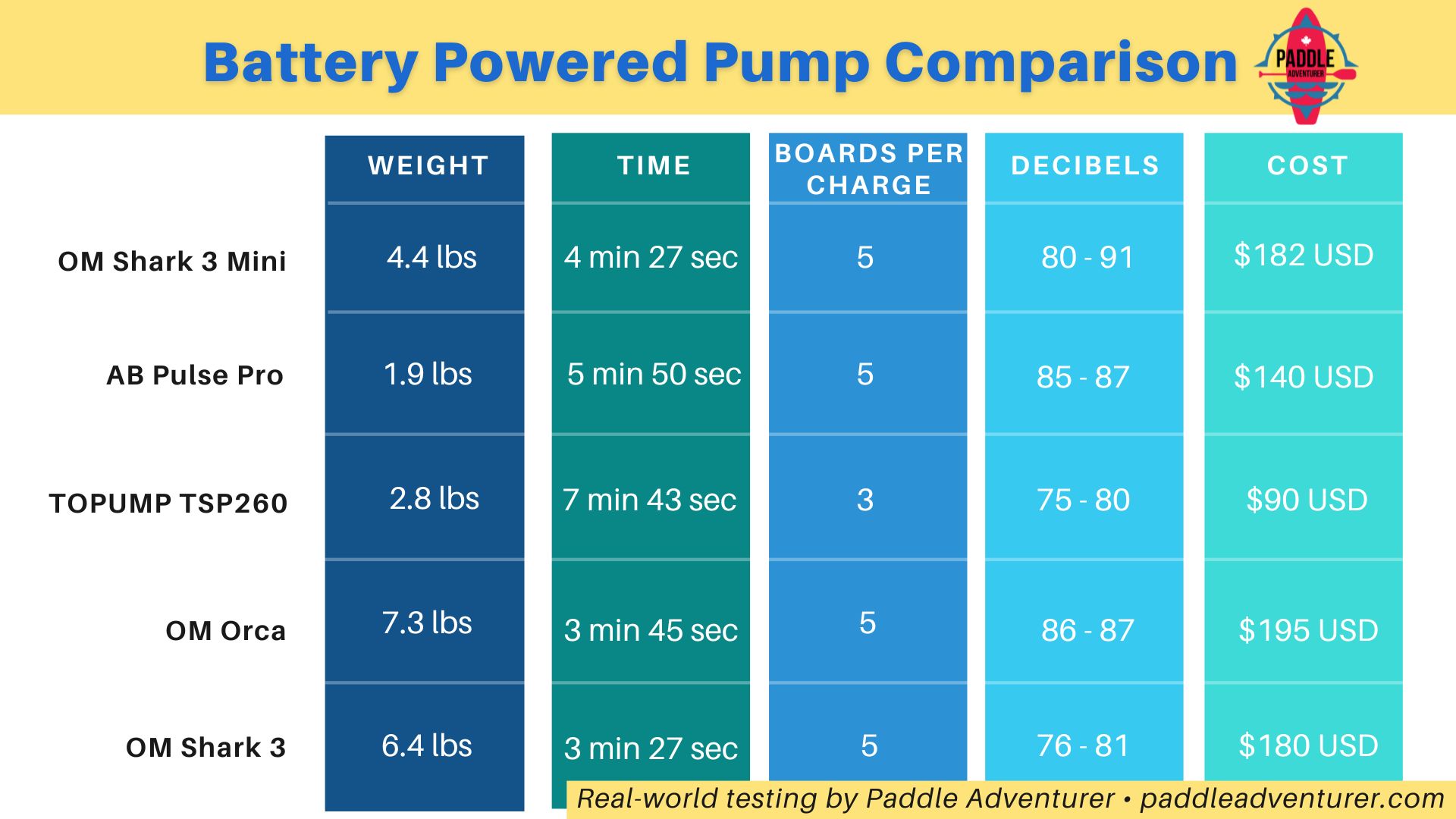
Best Battery Powered Paddle Board Pumps at a Glance
After putting all five pumps through the same testing, these were my top picks:
- Best Overall: OutdoorMaster Shark 3
- Best Compact Pump: Airbank Pulse Pro
- Fastest Pump: OutdoorMaster Shark 3
- Best Budget Pump: TOPUMP TPS260
There isn’t one pump that’s best for everyone. Size, speed, battery life, price and how many boards you typically inflate can all make a difference in which pump is the best fit for you.
How I Tested the Paddle Board Pumps
To make the comparison as consistent as possible, every pump was tested using the same Red Equipment 11′ Compact paddle board. The board has a volume of 259L and was inflated from empty to 16 PSI for each test.
Inflation speed was tested at an air temperature of approximately 77°F (25°C). To test battery life, I continued inflating the same board until each pump could no longer reach 16 PSI, with approximately 1–2 minutes between inflations while the board was deflated.
I also tested noise level, deflation time and charging time. Pumps that charge via USB-C were charged using the same 65W USB-C charger.
What All Five Pumps Have in Common
All five battery-powered pumps in this comparison:
- Are dual-stage
- Automatically shut off at the selected pressure
- Have automatic cooling
- Inflate and deflate
- Include H3 and C7 SUP valve attachments, along with additional nozzles for other inflatables
- Inflated at least three paddle boards back-to-back during testing
- Include a two-year warranty
While I used the same testing conditions for comparison, inflation times and battery performance can vary depending on the size and pressure of your board, air temperature and other conditions.
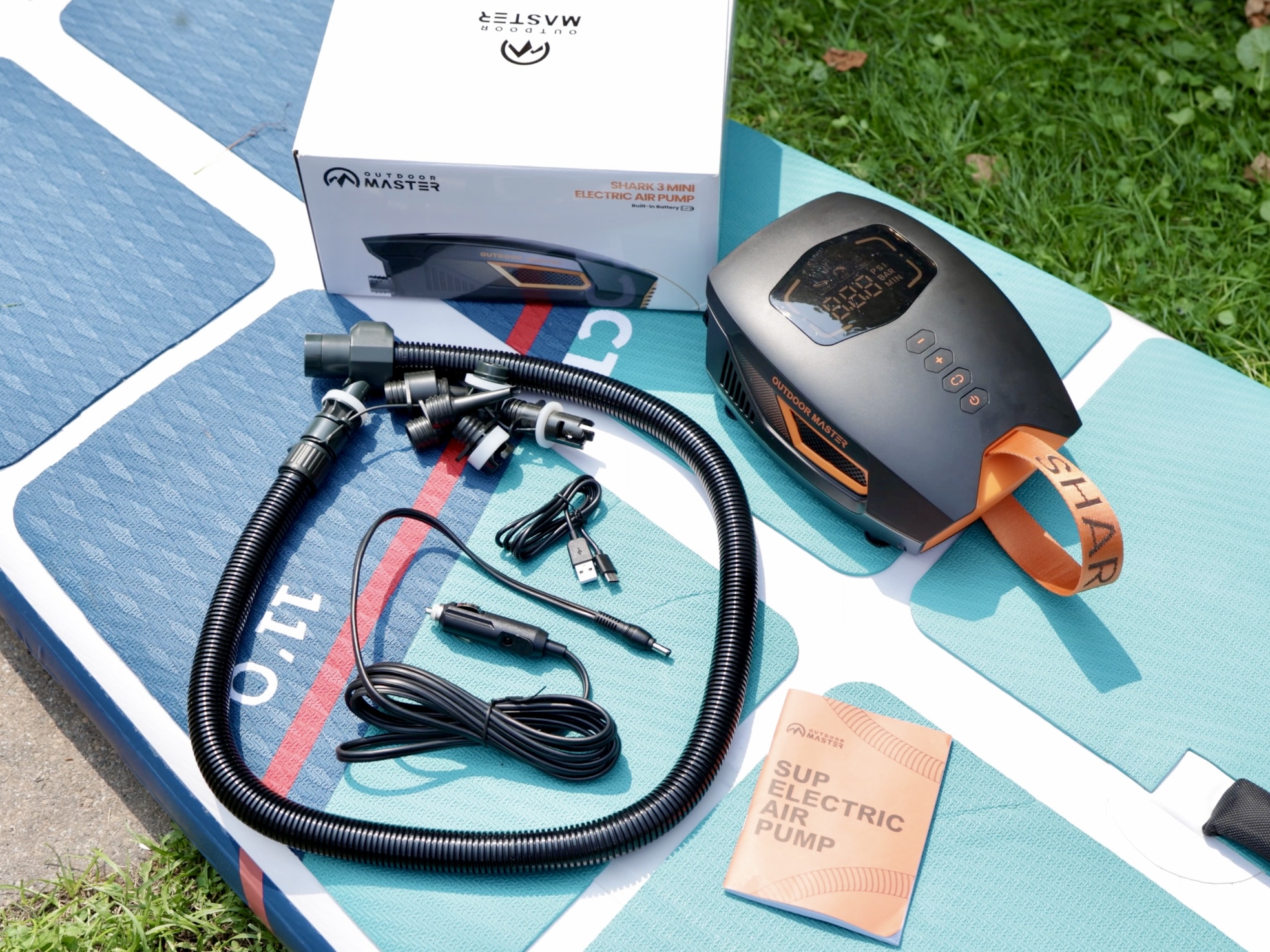
OutdoorMaster Shark 3 Mini
The OutdoorMaster Shark 3 Mini takes a lot of what I like about the larger Shark 3 and puts it into a much smaller package. It’s 50% smaller than the Shark 3 and, at 4.4 lbs, is considerably easier to pack and carry.
Despite its smaller size, it was one of the faster pumps in my testing. The Shark 3 Mini inflated my 11′ board to 16 PSI in 4 minutes 27 seconds and inflated five full boards on a single charge, stopping on the sixth at 14.8 PSI.
Shark 3 Mini Test Results
- Weight: 4.4 lbs
- Battery: 74 Wh
- Maximum pressure: 20 PSI
- Inflation time: 4 min 27 sec
- Boards per charge: 5
- Noise: 80–91 dB
- Deflation time: 56 sec
- Charging time: Approximately 3 hours
- Power bank: Yes
- 12V: Yes, can power or charge the pump
What I Like
For its size, the Shark 3 Mini is impressively fast. I also like the versatility of the 12V connection. You can use it to power the pump directly from your vehicle or recharge the internal battery, giving you a backup option if the battery dies or you want to conserve it.
When charging via 12V, the pump takes about a minute to completely power down before charging begins.
When running directly from 12V, inflation is slower. It took 5 minutes 54 seconds to inflate the same board compared with 4:27 using the internal battery.
Things to Consider
The biggest downside is noise. At 80–91 dB, this was the loudest battery powered pump in my comparison.
I’m also not a huge fan of the battery indicator used on many OutdoorMaster pumps. It doesn’t give you as precise an idea of the remaining battery as some of the other pumps I tested.
The power button also needs to be held for a few seconds before the pump turns on. It’s slower than the other pumps, although that isn’t necessarily a bad thing. I’ve had electric pumps accidentally turn on when they’re packed among other gear, so the longer press can help prevent that.
Who Is the Shark 3 Mini Best For?
I’d recommend the Shark 3 Mini for someone who wants a fast electric paddle board pump without the size and weight of the larger high-performance pumps. It’s a good middle ground between portability and inflation speed.
🛒 Shop the OutdoorMaster Shark 3 Mini
Buy Shark 3 Mini direct from OutdoorMaster + Save 15% with code ‘PaddleAdventurer’
Prefer Amazon? Shop the Shark 3 Mini on Amazon
Airbank Pulse Pro
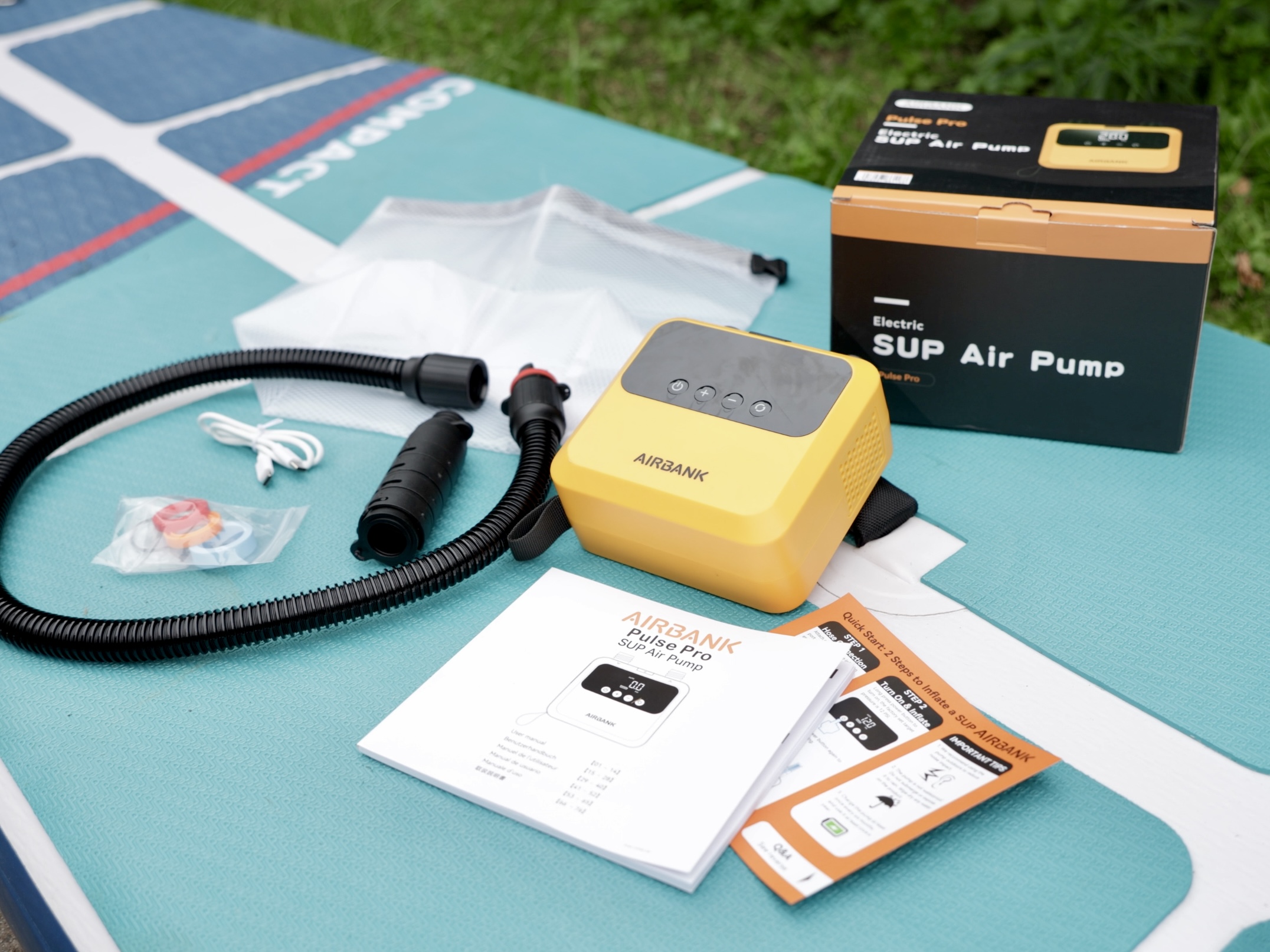
The Airbank Pulse Pro is the smallest and lightest pump in this comparison. Weighing just under 2 lbs, it’s noticeably smaller than the other pumps I tested and is a great option when space and weight matter.
Considering its size, the Pulse Pro surprised me. It inflated my 11′ board to 16 PSI in 5 minutes 50 seconds and managed five full boards on a single charge, stopping on the sixth at 1 PSI.
Airbank Pulse Pro Test Results
- Weight: Just under 2 lbs
- Battery: 66.6 Wh
- Maximum pressure: 20 PSI
- Inflation time: 5 min 50 sec
- Boards per charge: 5
- Noise: 85–87 dB
- Deflation time: 41 sec
- Charging time: 2 hr 25 min
- Power bank: Yes
- 12V backup: No
What I Like
For such a small pump, the Pulse Pro packs a punch. Getting five full paddle boards from a pump weighing less than 2 lbs was impressive, and it was also one of the faster-charging pumps in my testing.
I also prefer its five-bar battery indicator, which gives you a better idea of how much battery is remaining.
The pump comes with a waterproof storage bag, which is a nice addition for paddlers. Its small size also makes it easy to fit into a gear bin or pack when space is limited.
Things to Consider
The biggest trade-off for the smaller size is the hose. It’s noticeably lighter than the hoses on some of the other pumps and doesn’t feel quite as robust.
Unlike the Shark 3 Mini and Shark 3, there’s also no option to run the Pulse Pro from your vehicle’s 12V outlet if the internal battery dies.
Who Is the Airbank Pulse Pro Best For?
I’d recommend the Pulse Pro for someone who travels frequently or wants to keep the size and weight of their gear to a minimum. It’s especially useful when portability matters but you still want enough battery capacity to inflate multiple boards. Check out my How to Travel With Your Paddle Board guide for more tips on flying and travelling with your SUP gear.
I actually take this pump on my backcountry paddle board trips as a backup with my repair kit. At just under 2 lbs, it’s small and light enough to pack without taking up much space, while still giving me the option to inflate a board if I need to.
🛒 Shop the Airbank Pulse Pro
Buy Pulse Pro direct from Airbank + Save 5% with code ‘PaddleAdventurer’
Prefer Amazon? Shop the Pulse Pro on Amazon
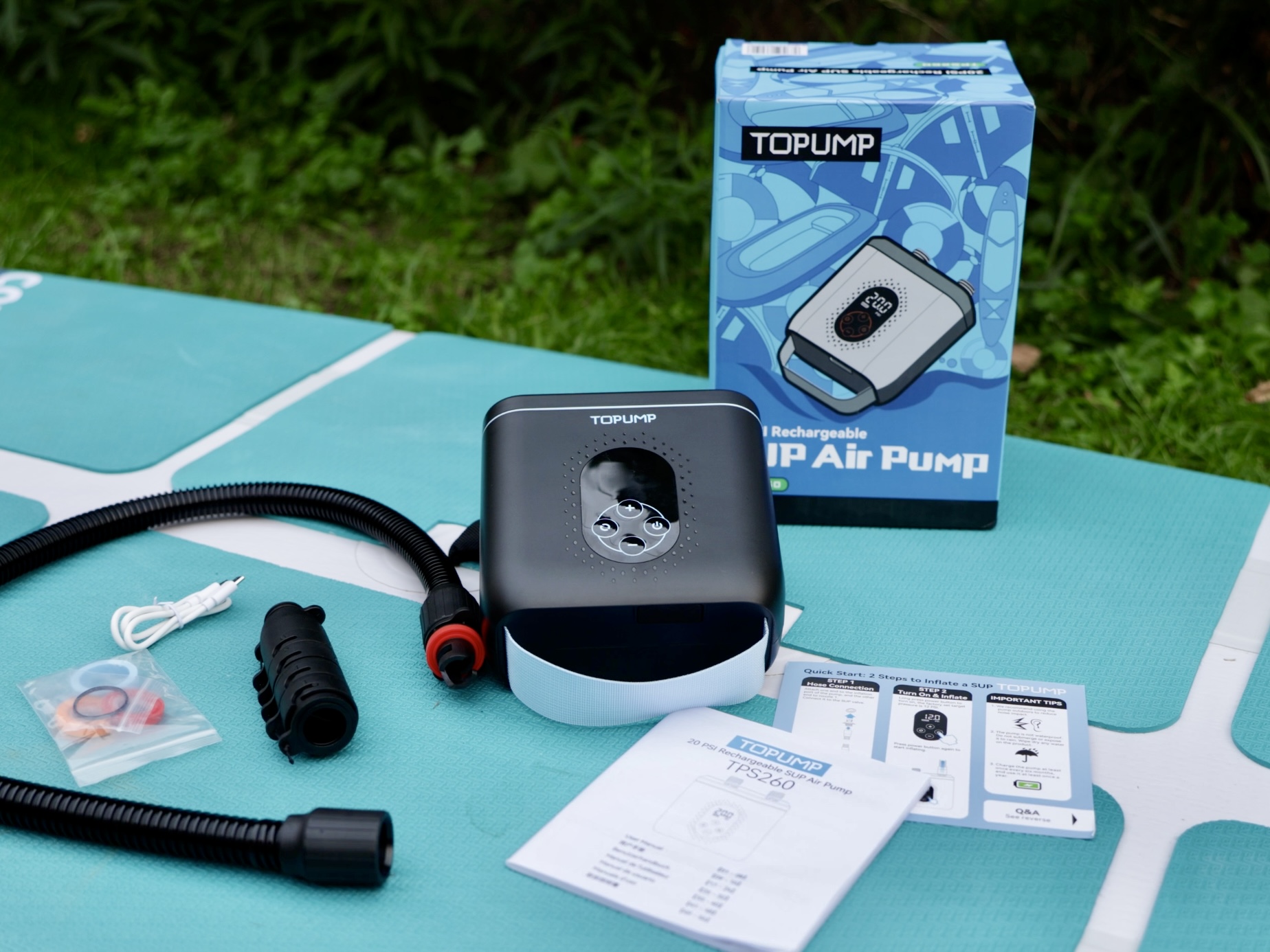
TOPUMP TPS260
The TOPUMP TPS260 is the budget-friendly option in this comparison. It doesn’t have the speed or battery capacity of some of the more expensive pumps, but if you’re typically inflating one paddle board at a time, it gets the job done without spending as much.
In my testing, the TPS260 inflated my 11′ board to 16 PSI in 7 minutes 43 seconds. It inflated three full boards on a single charge, stopping on the fourth at 13.2 PSI.
TOPUMP TPS260 Test Results
- Weight: 2.8 lbs
- Battery: 44.4 Wh
- Maximum pressure: 20 PSI
- Inflation time: 7 min 43 sec
- Boards per charge: 3
- Noise: 75–80 dB
- Deflation time: 1 min 20 sec
- Charging time: 3 hr 5 min
- Power bank: Yes
- 12V backup: No
What I Like
The biggest advantage of the TPS260 is its price. At the time of my testing, it was the only battery powered pump in this comparison priced under $100 USD.
It’s also relatively compact and lightweight at 2.8 lbs, and the five-bar battery indicator makes it easy to see approximately how much charge you have remaining.
Things to Consider
At 7 minutes 43 seconds, the TPS260 was the slowest battery powered pump in this comparison. Its smaller 44.4 Wh battery also meant it inflated fewer boards per charge than the other pumps, although three full boards is still plenty if you’re usually only inflating one or two.
I did find the battery indicator a little inconsistent while charging. It initially showed a full charge after about 1 hour 45 minutes, but when I went to use the pump, it showed only two of five bars. A full charge took approximately 3 hours 5 minutes in my testing.
Like the Airbank Pulse Pro, the hose is lightweight and doesn’t feel quite as robust as some of the thicker hoses in this comparison.
Who Is the TOPUMP TPS260 Best For?
I’d recommend the TPS260 for someone who usually inflates one paddle board and wants an affordable battery powered pump. You’re giving up some inflation speed and battery capacity compared with the more expensive options, but if those aren’t priorities for you, it’s a good budget-friendly choice.
🛒 Shop the TOPUMP TPS260
Buy TPS260 direct from TOPUMP + Save 5% with code ‘PaddleAdventurer’
Prefer Amazon? Shop the TPS260 on Amazon
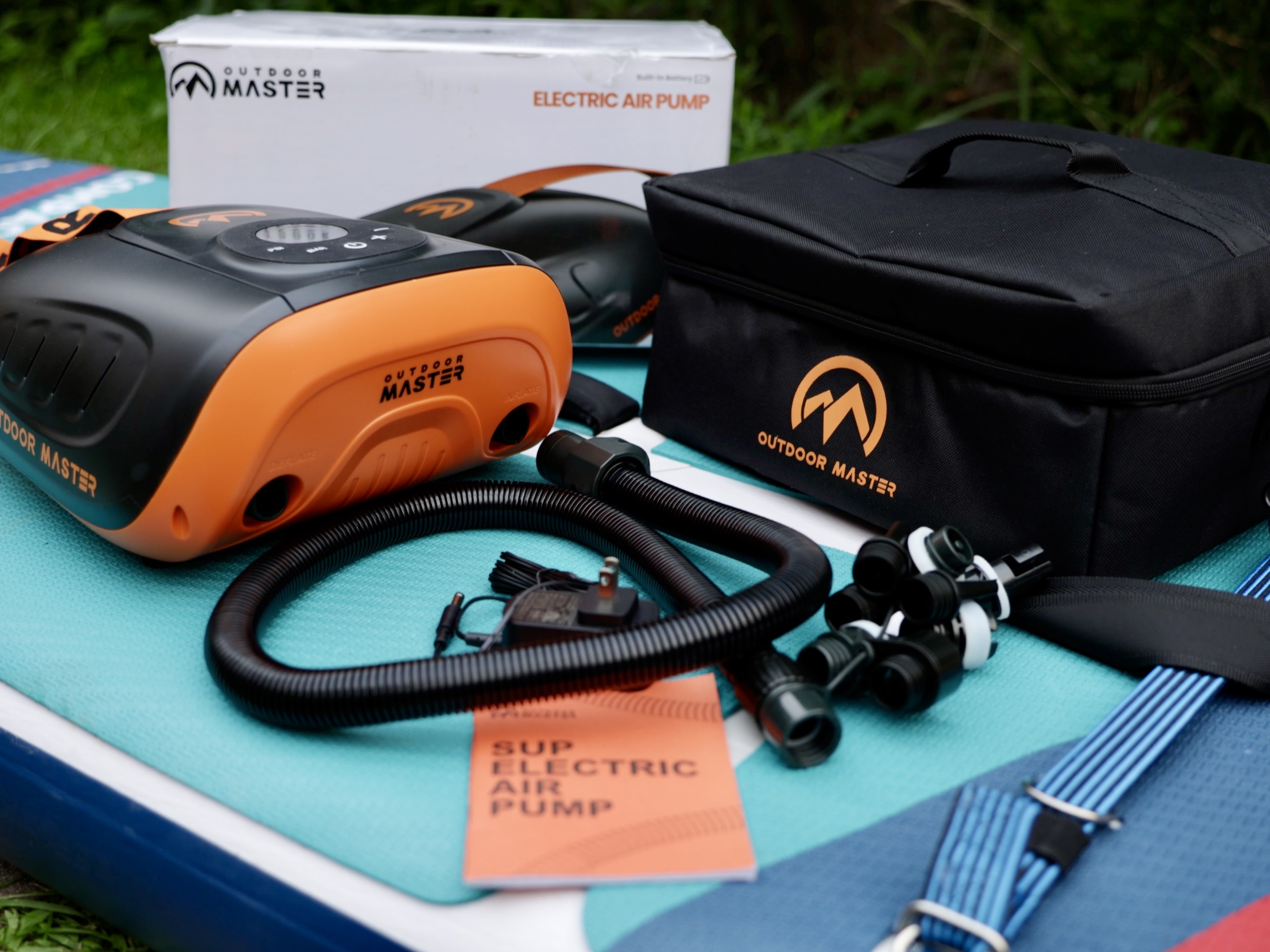
OutdoorMaster Orca Pro
The OutdoorMaster Orca Pro is the heavy-duty pump in this comparison. It’s larger and heavier than the other battery powered pumps I tested, but it’s also powerful. The Orca Pro was the second-fastest pump in my testing and is the only one in this comparison capable of inflating a board above 20 PSI.
It inflated my 11′ board to 16 PSI in 3 minutes 45 seconds and inflated five full boards on a single charge, stopping on the sixth at 13.8 PSI.
OutdoorMaster Orca Pro Test Results
- Weight: 7.3 lbs
- Battery: 74 Wh
- Maximum pressure: 25 PSI
- Inflation time: 3 min 45 sec
- Boards per charge: 5
- Noise: 86–87 dB
- Deflation time: Over 2 min
- Charging time: 4 hr 40 min
- 12V backup: No
What I Like
The biggest advantage of the Orca Pro is its combination of speed and pressure. At 3 minutes 45 seconds, it was only 18 seconds behind the fastest pump in my testing.
It’s also one of the few battery powered paddle board pumps I’ve tested that can reach 25 PSI, making it useful for boards and other inflatables that require higher pressures.
I also really like the display. Unlike the other pumps in this comparison, it simultaneously shows the pressure you’ve set for auto shutoff and the current pressure of your board as it’s inflating. The battery indicator is also much easier to read than the one on the Shark 3 and Shark 3 Mini.
The Orca Pro comes with a sturdy carrying case, which I appreciate for keeping the larger pump, hose and accessories together.
Things to Consider
At 7.3 lbs, the Orca Pro is the heaviest pump in this comparison. It’s not the pump I’d choose when size or weight is a priority.
I was also surprised by the battery performance. Considering its size and weight, I expected the Orca Pro to inflate more boards than the smaller pumps. It managed five full boards, which is good, but that’s the same result I got from several smaller pumps in this comparison.
It also had the longest charging time at approximately 4 hours 40 minutes, and took over two minutes to deflate the board.
Who Is the OutdoorMaster Orca Pro Best For?
I’d recommend the Orca Pro for someone who wants a heavy-duty, fast pump or needs to inflate boards above 20 PSI. Its size and weight make it less appealing for travel or backcountry use, but if portability isn’t a priority, the extra pressure capability and fast inflation are where this pump stands out.
🛒 Shop the OutdoorMaster Orca Pro
Buy Orca Pro direct from OutdoorMaster + Save 15% with code ‘PaddleAdventurer’
OutdoorMaster Shark 3
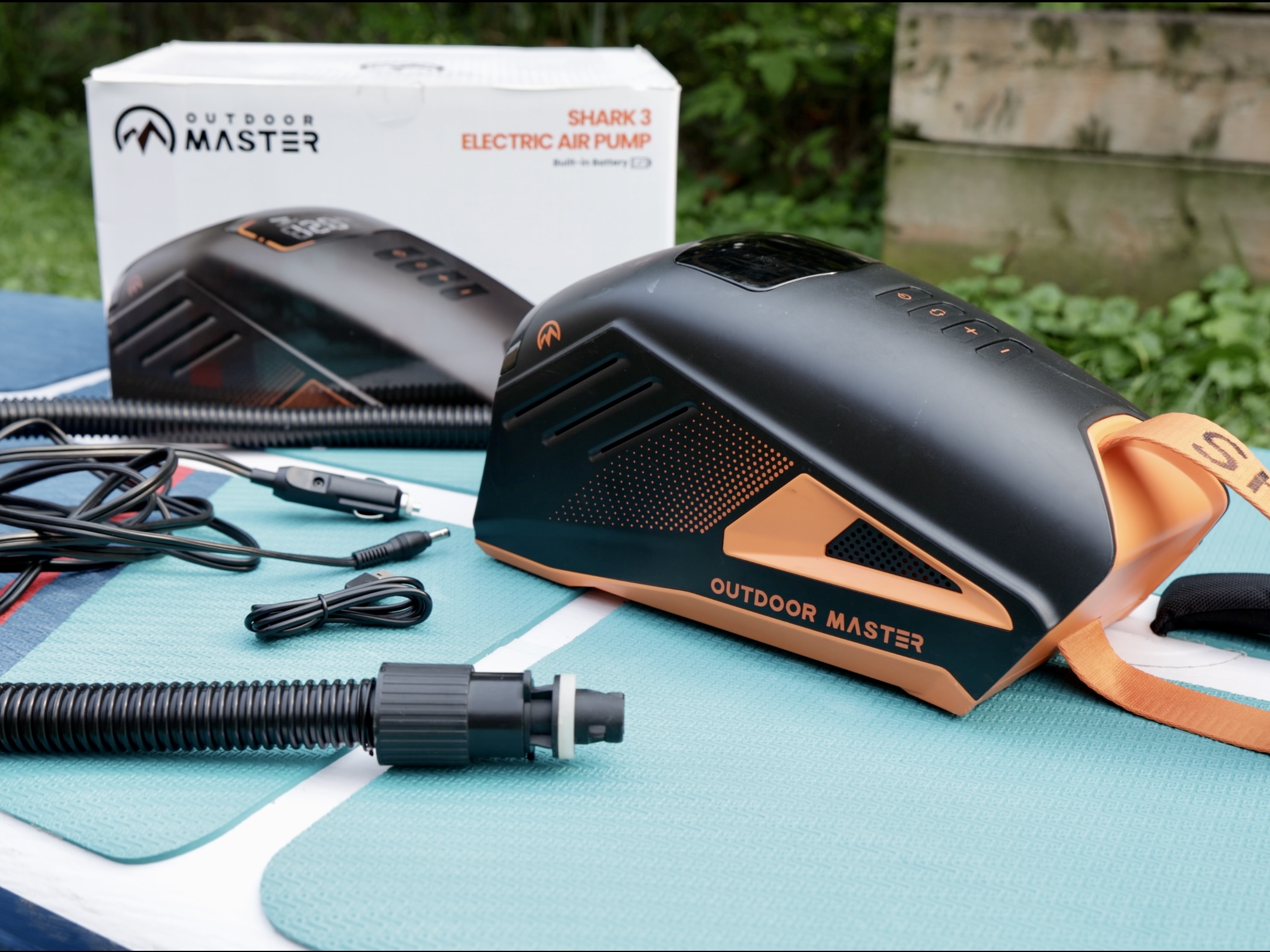
The OutdoorMaster Shark 3 isn’t new to me. I first tested it last year and have continued using it ever since. I brought it back for this comparison to see how it stacked up against the newer pumps and, more importantly, whether it could hold onto its title as the fastest pump I’ve tested.
It did.
The Shark 3 inflated my 11′ board to 16 PSI in just 3 minutes 27 seconds, making it the fastest pump in this comparison. It also inflated five full boards on a single charge, stopping on the sixth at around 14 PSI.
OutdoorMaster Shark 3 Test Results
- Weight: 6.4 lbs
- Battery: 74 Wh
- Maximum pressure: 20 PSI
- Inflation time: 3 min 27 sec
- Boards per charge: 5
- Noise: 76–81 dB
- Deflation time: Approximately 1 min 30 sec
- Charging time: Just under 2 hours
- Power bank: Yes
- 12V: Yes, can power or charge the pump
What I Like
Speed is where the Shark 3 really stands out. At 3 minutes 27 seconds, it remains the fastest battery powered paddle board pump I’ve tested.
I also like the versatility of the 12V connection. You can use it to power the pump directly from your vehicle or recharge the internal battery. When charging via 12V, the pump takes about a minute to completely power down before charging begins.
When running directly from 12V, inflation is considerably slower. It took 7 minutes 26 seconds to inflate the same board compared with 3:27 using the internal battery. However, if there’s enough charge in the battery, you can unplug the 12V cable while the pump is running and it will seamlessly continue inflating using battery power.
Charging the Shark 3 via USB-C was also much faster than when I originally tested this pump. Using a 65W USB-C charger, a full charge took just under two hours.
Most importantly, I’ve now been using the Shark 3 for over a year and haven’t had any issues with it. That combination of speed and reliability is why it remains my top pick.
Things to Consider
At 6.4 lbs, the Shark 3 is one of the heavier pumps in this comparison. If portability and packing space are your priorities, there are much smaller options.
Like the Shark 3 Mini, I’m also not a huge fan of the battery indicator. It doesn’t give you as precise an idea of the remaining charge as some of the other pumps.
Deflation is surprisingly slow considering how quickly the Shark 3 inflates. It took approximately a minute and a half to deflate the board.
Who Is the OutdoorMaster Shark 3 Best For?
I’d recommend the Shark 3 for someone who prioritizes inflation speed and wants a pump capable of handling multiple boards on a single charge.
It’s my Best Overall pick because it’s not just the fastest pump in this comparison. I’ve also been using it for over a year with zero issues, which gives me more confidence recommending it beyond the results of a single test.
🛒 Shop the OutdoorMaster Shark 3
Buy Shark 3 direct from OutdoorMaster + Save 15% with code ‘PaddleAdventurer’
Prefer Amazon? Shop the Shark 3 on Amazon
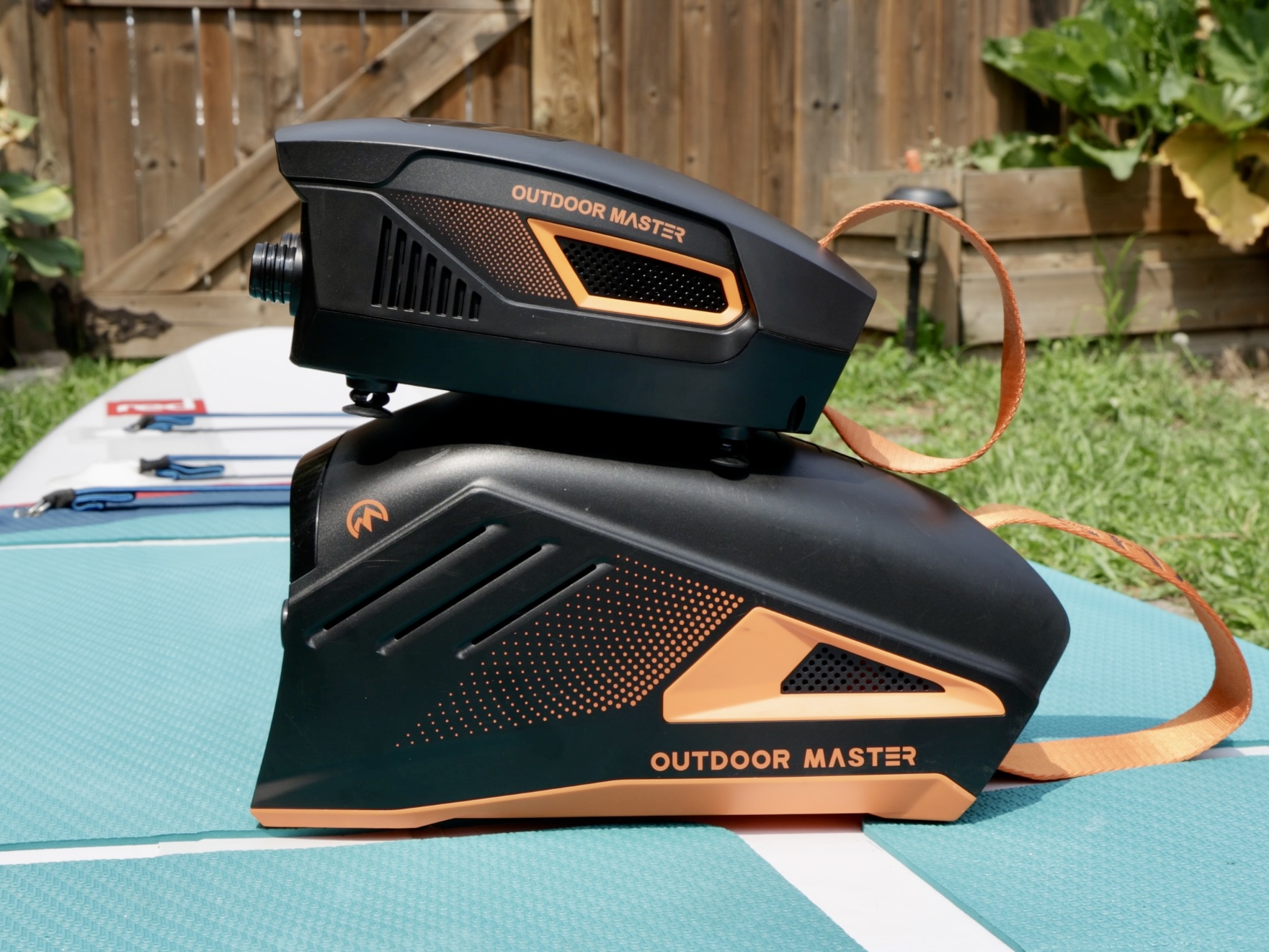
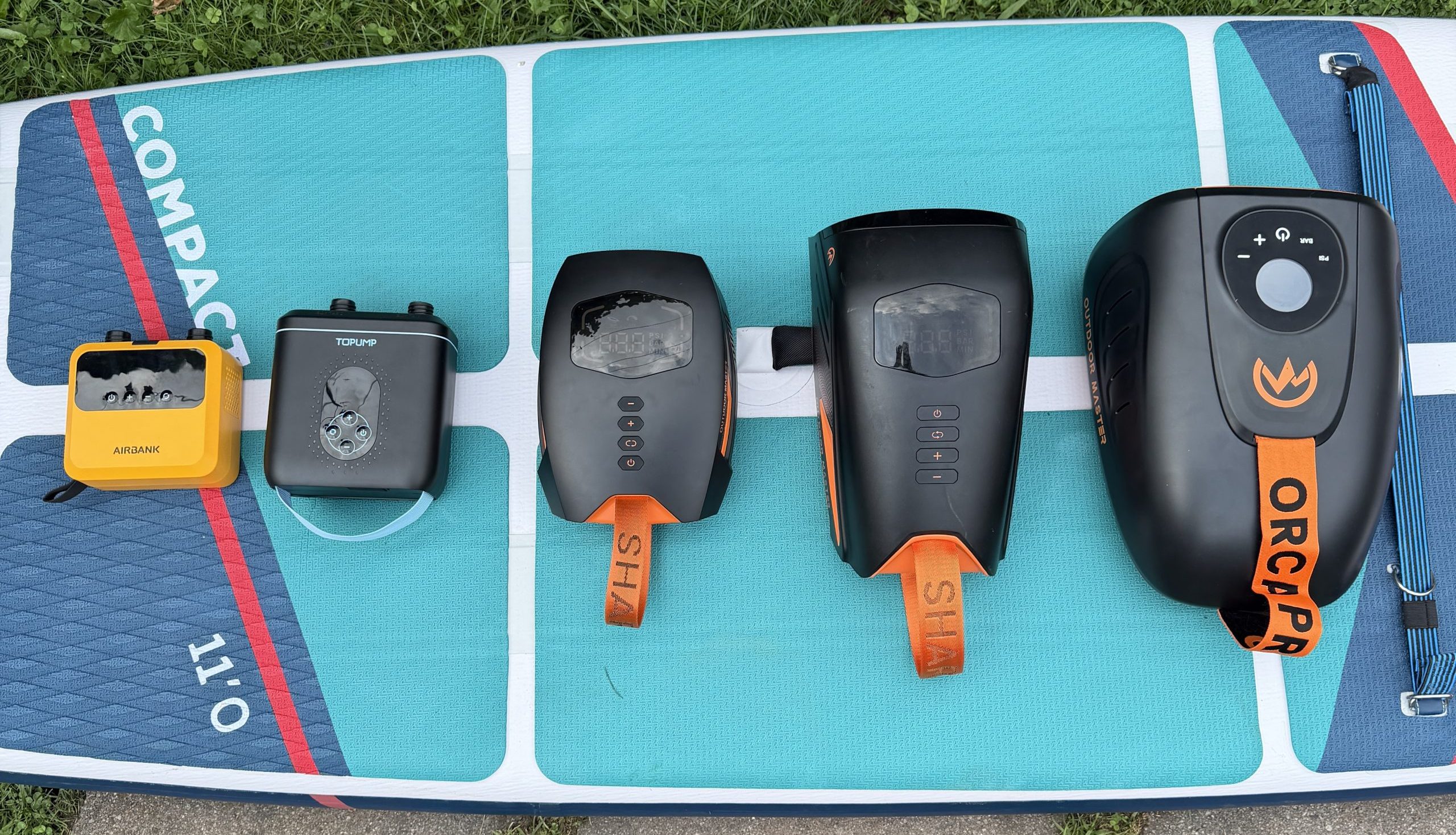
Outdoor Master Shark 3 Mini vs Shark 3 size comparison
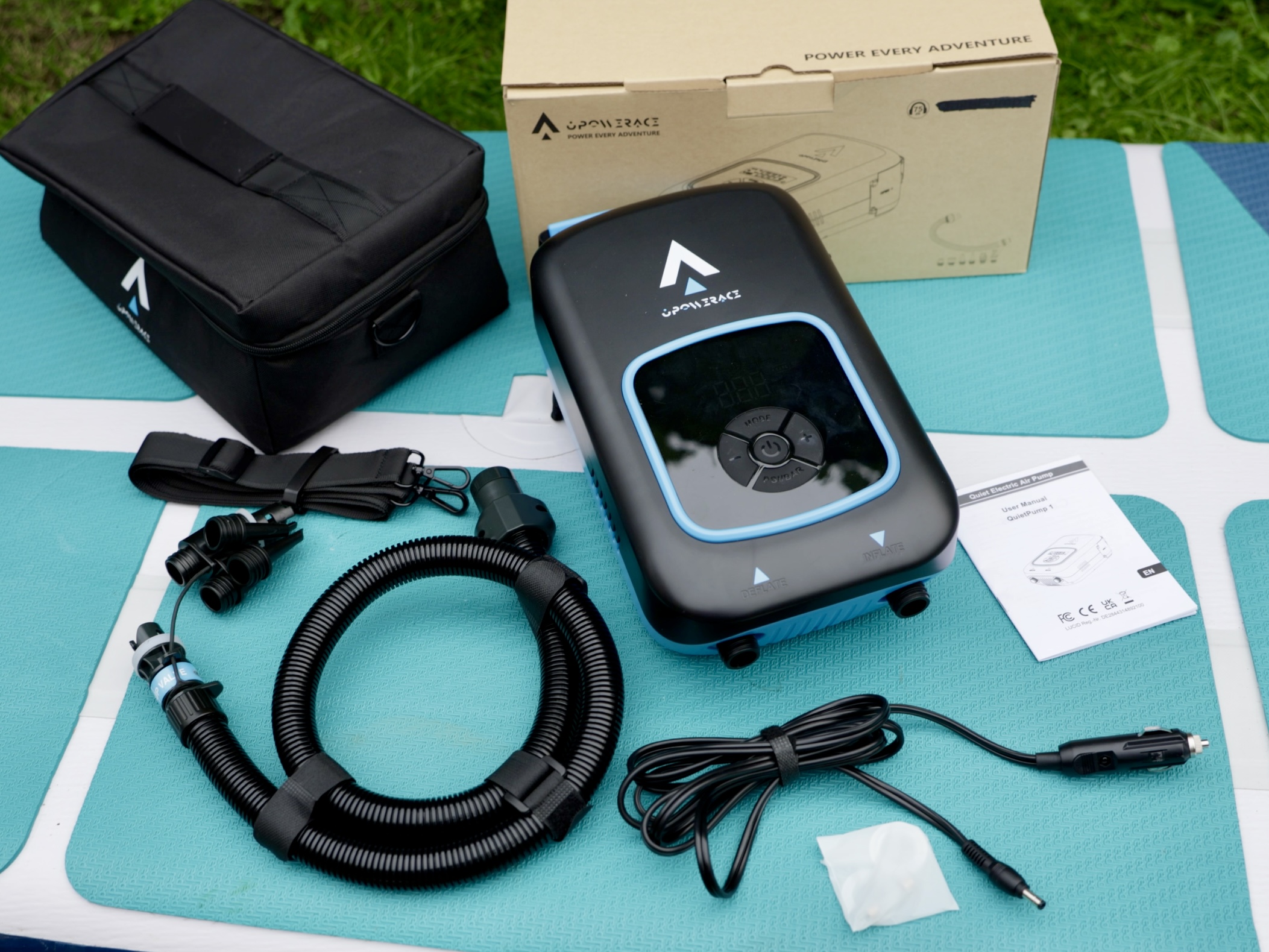
Bonus Test: UPowerAce QuietPump1
Before wrapping up the pump testing, I wanted to try something a little different: an electric paddle board pump designed specifically to tackle one of the biggest complaints about electric pumps: noise.
The UPowerAce QuietPump1 isn’t included in my main comparison because it’s a plug-in pump rather than battery-powered.
Still, I thought it was worth testing because it’s the only paddle board pump I’ve come across that’s specifically designed to be quieter.
QuietPump1 Test Results
- Maximum pressure: 20 PSI
- Inflation time: 7 min 46 sec
- Noise: 65–74 dB
- Power: 12V plug-in
- Inflate and deflate: Yes
What I Like
The QuietPump1 isn’t designed to win on speed. Its focus is reducing noise, and that’s exactly where it delivered.
It inflated my 11′ board to 16 PSI in 7 minutes 46 seconds, but registered just 65–74 dB during testing. That’s noticeably quieter than every battery powered pump in this comparison.
I also like some of the small design details. The 12V cord stores directly inside the pump, and the included case has Velcro straps to help keep the cord and hose organized.
Things to Consider
The biggest limitation is that the QuietPump1 isn’t battery powered. You’ll need access to a 12V power source, which makes it less versatile than the other pumps in this comparison.
While UPowerAce is based in Europe, the QuietPump1 is available for international shipping.
Who Is the QuietPump1 Best For?
If noise is your biggest complaint about electric paddle board pumps, the QuietPump1 is worth a look. It’s not the fastest option, but it was easily the quietest pump I tested.
For now, though, its plug-in design and limited availability make it more of a specialized option than an alternative to the battery powered pumps above.
🛒 Shop the UPowerace Quiet Pump 1
Buy Quiet Pump 1 direct from UPowerace + Save 15% with code ‘PA15
Bonus Test: OutdoorMaster Electric Ray Power Bank
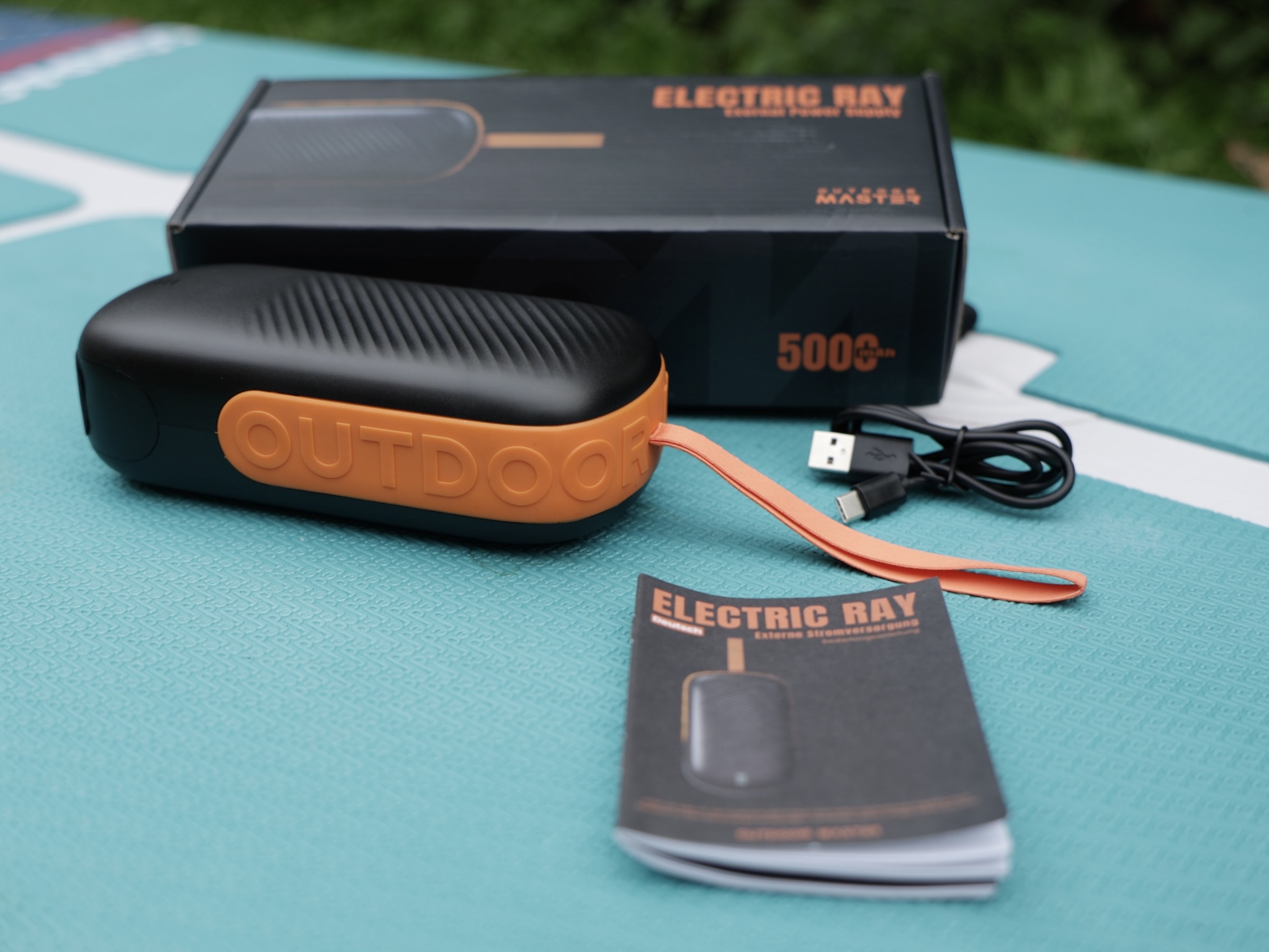
One last product I tested was the OutdoorMaster Electric Ray Power Bank. This isn’t a paddle board pump itself. Instead, it’s a portable battery bank with a 12V outlet that allows you to use a plug-in electric pump away from your vehicle.
I really wanted to like this idea. If you already own a 12V paddle board pump, adding a portable power supply could theoretically give you the convenience of a battery powered pump without replacing something you already own.
Unfortunately, the performance fell short in my testing.
The Electric Ray fully inflated one board to 16 PSI on a single charge and ran out of power on the second board just before reaching 16 PSI. It also took just under six hours to fully recharge.
At around $70 USD at the time of testing, I’d recommend putting that money toward upgrading to a dedicated battery powered paddle board pump instead.
It’s a great idea in theory, but based on my testing, I don’t think the battery capacity or charging time makes it a practical alternative to the battery powered pumps in this comparison.
🛒 Shop the OutdoorMaster Electric Ray Power Bank
Buy Electric Ray Power Bank direct from OutdoorMaster + Save 15% with code ‘PaddleAdventurer’
What to Look for in a Battery Powered Paddle Board Pump
The best battery powered paddle board pump really depends on how you plan to use it. Before choosing one, here are a few things I consider:
Inflation speed: If you want to get on the water as quickly as possible, inflation time can make a big difference. It’s even more noticeable when you’re pumping multiple boards.
Battery life: Think about how many boards you realistically need to inflate on a single charge. If you usually paddle alone, you may not need a pump capable of inflating five boards.
Size and weight: A few extra pounds may not matter when the pump lives in your vehicle, but they make a big difference when you’re flying with your paddle board or carrying gear into the backcountry.
Charging options: USB-C fast charging is convenient, but the charger you use matters. I used a 65W USB-C charger for all of the USB-C pumps in this comparison. The ability to charge or power a pump from your vehicle’s 12V outlet can also provide a useful backup.
Noise: Electric paddle board pumps aren’t quiet. If you frequently inflate your board early in the morning, at a busy launch or around other campers, noise may be worth considering.
Customer service and warranty: Like any electronic product, occasionally you can get a defective unit. If something doesn’t seem right with your pump, don’t assume it’s normal. Reach out to the manufacturer. Buying from a reputable company that stands behind its products can be just as important as the pump itself.
I’ve had positive customer service experiences with each of the pump brands featured in this comparison.
Compare prices before you buy: If a pump is available both directly from the manufacturer and on Amazon, check both before purchasing. Prices and sales can vary, and sometimes the brand’s website is cheaper, especially when you can use one of my discount codes, while other times Amazon may have the better price.
My Top Battery Powered Paddle Board Pump Picks
After testing all five pumps, these are the three that stood out depending on what you’re looking for:
Best Overall: OutdoorMaster Shark 3
The Shark 3 remains my top pick for its combination of speed, battery life and reliability. At 3 minutes 27 seconds, it’s still the fastest battery powered paddle board pump I’ve tested. I’ve also been using mine for over a year without any issues, which gives me confidence recommending it beyond a single round of testing.
Best Compact Pump: Airbank Pulse Pro
At just under 2 lbs, the Pulse Pro is my pick when size and weight matter most. Despite being the smallest pump in this comparison, it still inflated five full boards on a single charge. It’s also the pump I take into the backcountry as a backup with my repair kit.
Best Budget Pump: TOPUMP TPS260
If you typically inflate one board and don’t need the fastest pump or biggest battery, the TPS260 offers a more affordable way to ditch the hand pump. It was the only battery powered pump in this comparison priced under $100 USD at the time of testing and still managed three full boards on a single charge.
Quick Tip: Charge Your Paddle Board Pump Faster
The charger you use can make a big difference in how long it takes to recharge your electric paddle board pump.
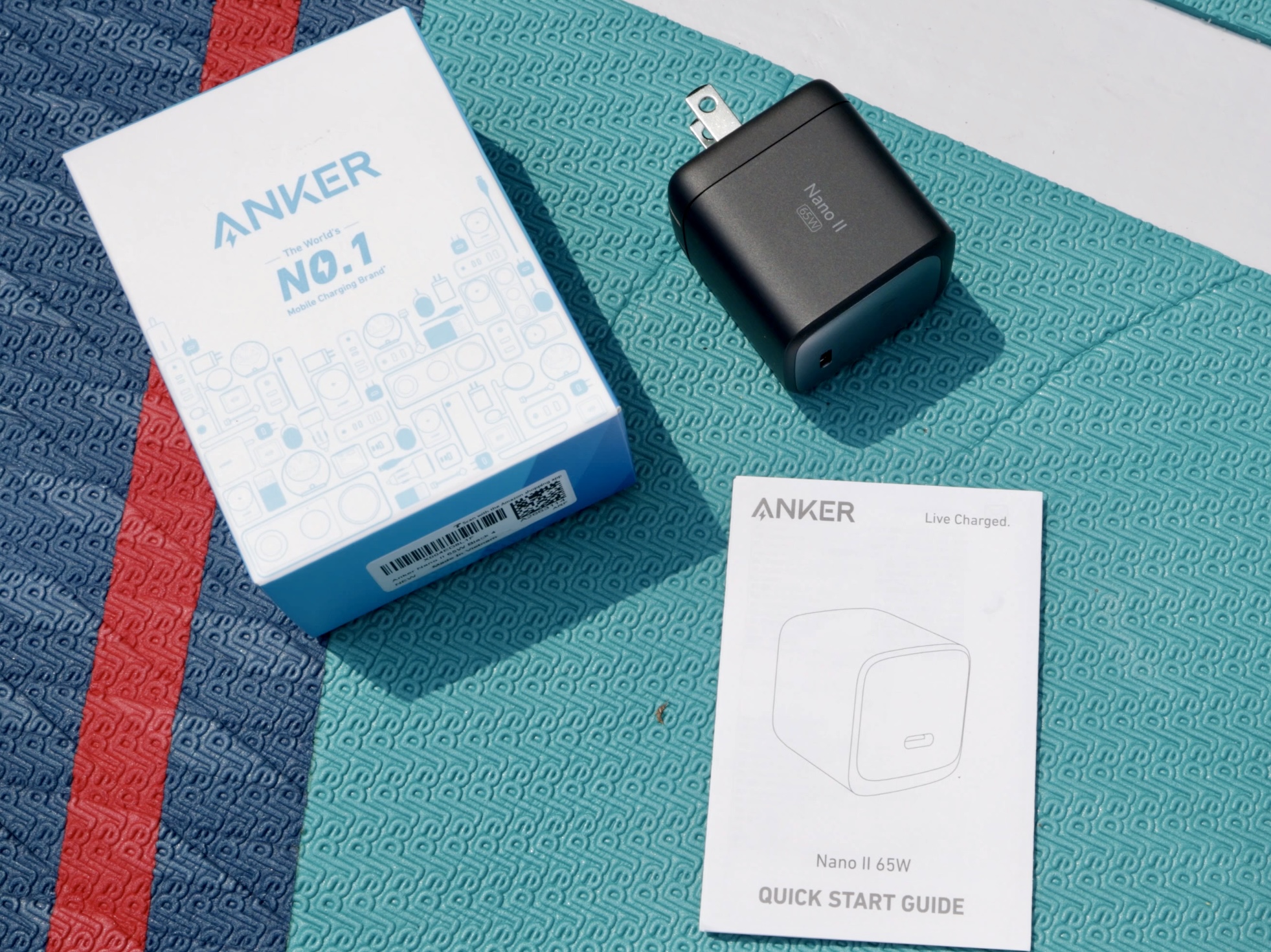
For this comparison, I charged all of the USB-C compatible pumps using a 65W USB-C charging block with a USB-C to USB-C cable. This significantly reduced the charging time of some pumps compared with my previous testing.
If your pump supports USB-C fast charging, check the manufacturer’s recommended charging specifications and use a compatible higher-wattage charging block rather than automatically reaching for an older phone charger.
If you’re new to electric paddle board pumps and want to learn more, check out my original blog post, “Electric Paddle Board Pump,” where I compare electric vs. manual pumping and share more tips for using an electric pump.
Final Thoughts on the Best Battery Powered Paddle Board Pumps
Having an electric paddle board pump is one of those upgrades that, once you have one, is hard to give up. But after testing more than 15 electric pumps over the past few years, one thing has become pretty clear: there isn’t one pump that’s best for everyone.
The Shark 3 is still my overall pick, but that doesn’t necessarily make it the best pump for you. If I’m packing for a backcountry trip, I’m reaching for the much smaller Pulse Pro. If budget is the priority, the TPS260 may make more sense.
Think about how many boards you normally inflate, how much size and weight matter to you, and which features you’ll actually use.
Electric paddle board pumps also go on sale regularly, so it’s worth checking current pricing before you buy. I have discount codes available for several of the brands featured in this comparison, which you can find on my Paddle Boarding Products & Deals page.
Ultimately, my goal with these comparisons isn’t to tell you what to buy. It’s to give you real-world testing and information so you can decide which pump makes the most sense for how you paddle.
Have you tried one of these pumps? I’d love to hear about your experience in the comments.



2 Comments
Desiree Bilon
Hi Marybeth,
Thank you so much for your research and for the chart that compares decibels. This is so helpful! Excellent work!
Desiree
Marybeth
Thanks for the comment and kind words, Desiree! I’m glad you found it helpful.