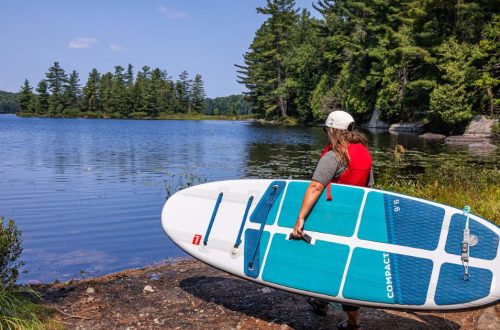
A Guide to Backcountry Camping on a Paddle Board
Backcountry camping on a paddle board might sound intense, but it’s one of the most rewarding ways to explore remote, protected spaces. Standing on a board, I feel more connected to nature and the places I travel through.
When I first tried it, I learned a lot through trial and error (I’m still learning!) and I want to help you feel more prepared and excited for your own SUP adventure.
Here are the top 5 things I learned:
1. The Right Board Makes a Big Difference
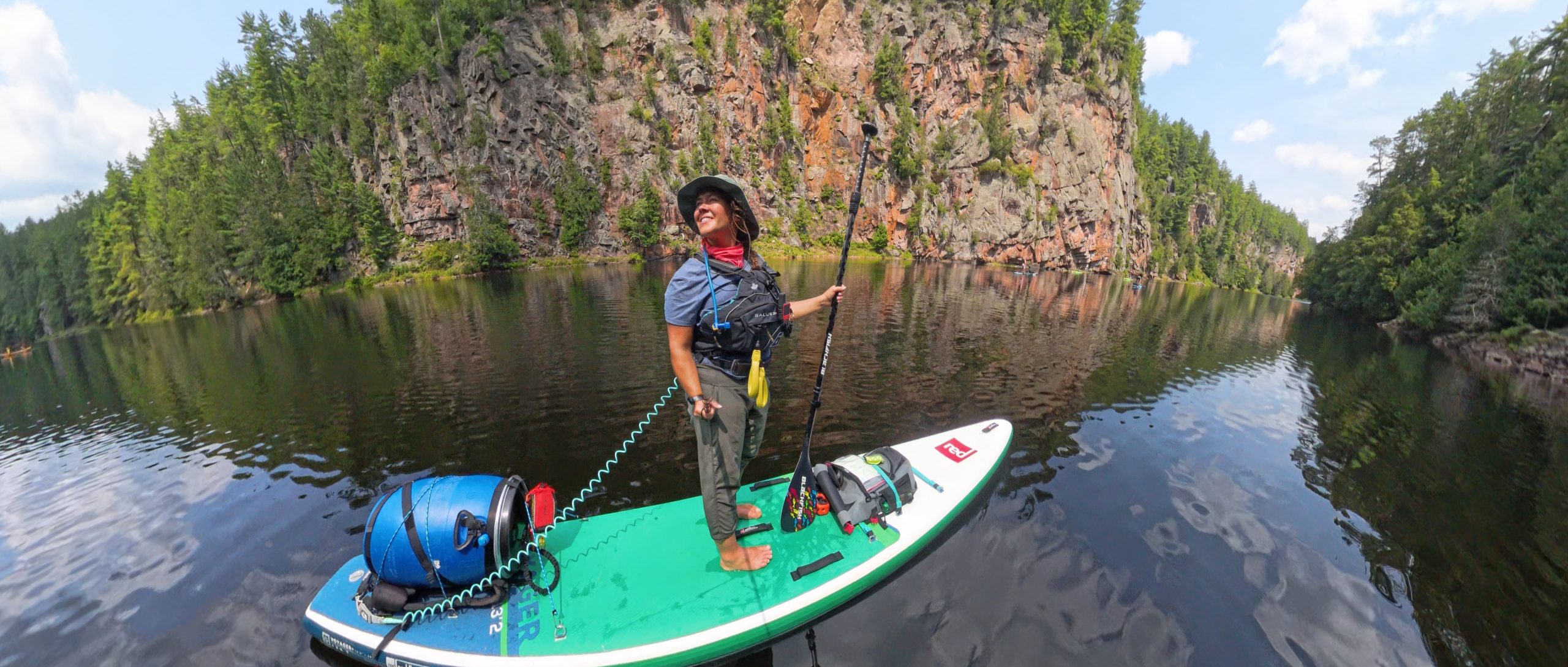
Inflatable SUPs (iSUPs) are ideal for backcountry trips. They’re easy to transport, durable for portages, and more forgiving in shallow or rocky waters.
If you’re carrying overnight gear, go for a larger board with higher volume and weight capacity. The size will better handle the additional weight and offer more stability when fully loaded.
Boards with both front and rear tie-downs are essential for distributing weight evenly and keeping your gear secure.
For easier portaging, I also recommend choosing a board with additional side handles.
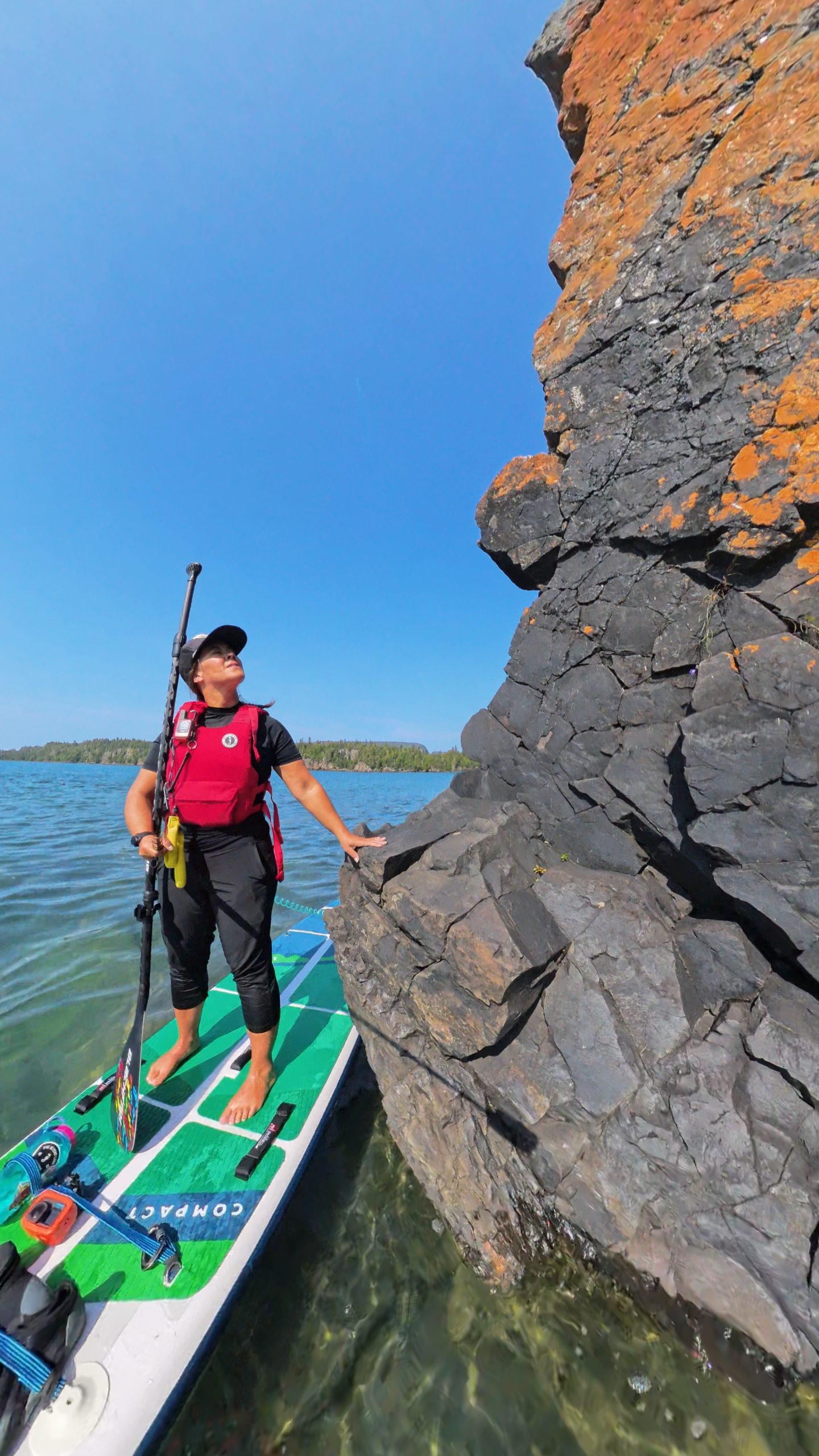
🛶 I use the Red Equipment Voyager 13’2, and it handles the extra weight like a dream.
If you’re interested in Red Equipment boards and hear, follow the link above and use ‘PaddleAdventurer’ for 10% off in the US and Canada.
2. Start Small
For your first trip, keep things short and simple.
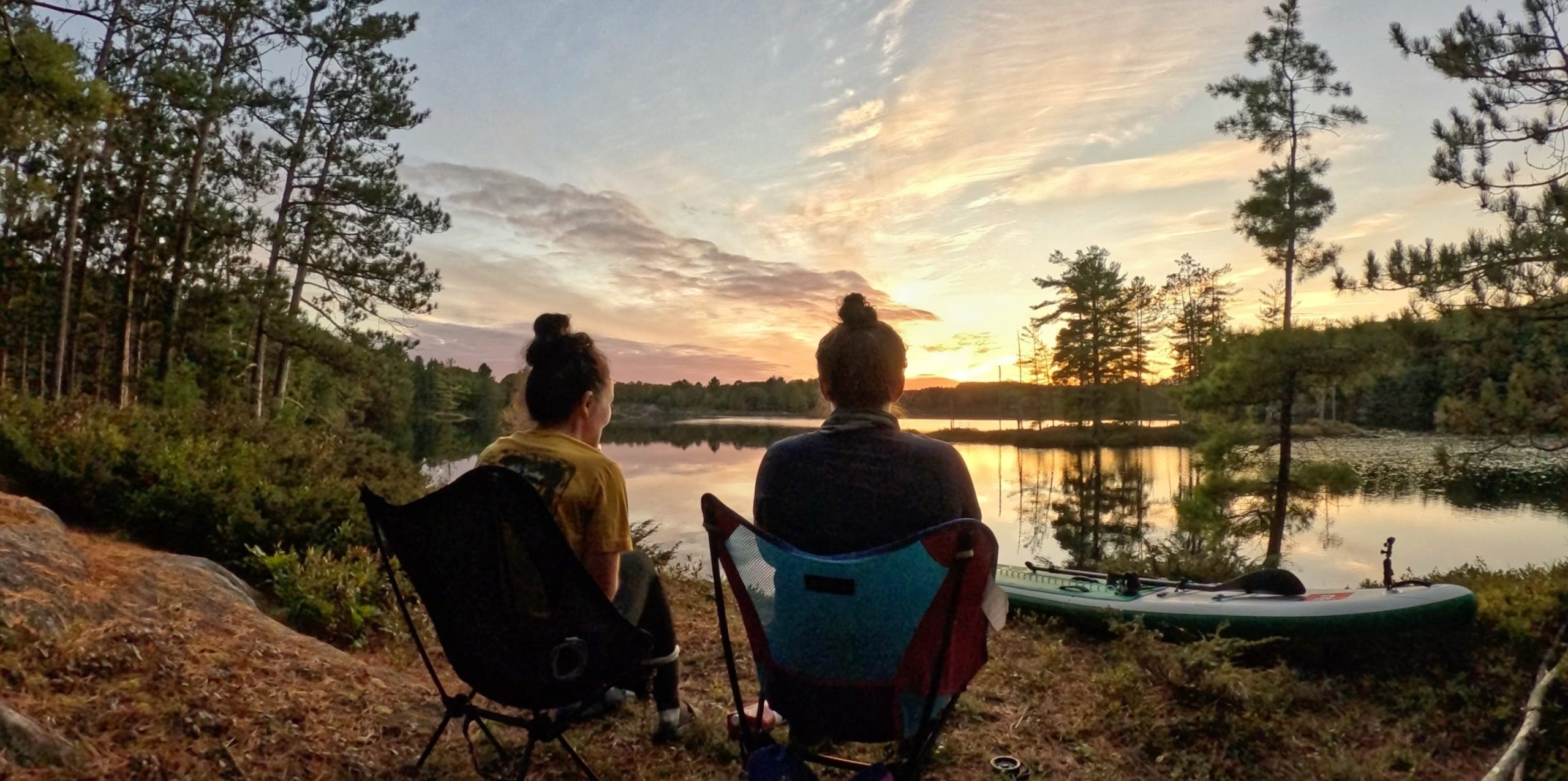
My first backcountry SUP trip was a single overnight with a 5–6 km paddle and no portages. Another great option is a fully loaded day trip: pack all your gear and test your setup. You could even try a short portage to practice.
This will help you feel how your board handles added weight and give you a chance to tweak your system before heading out on a multi-day adventure. It’s all about trial and error.
3. Waterproof Everything (and Then Secure It)
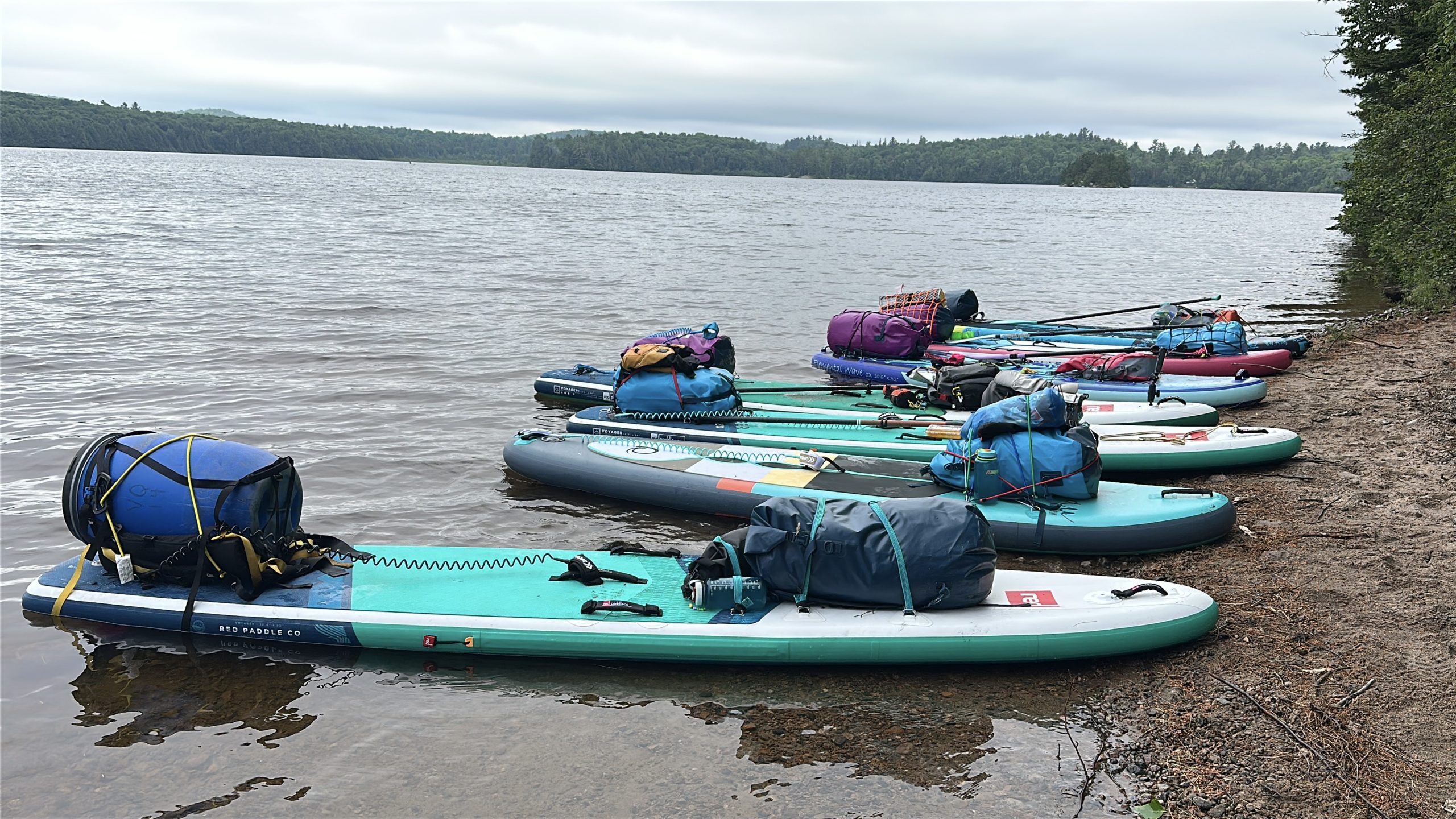
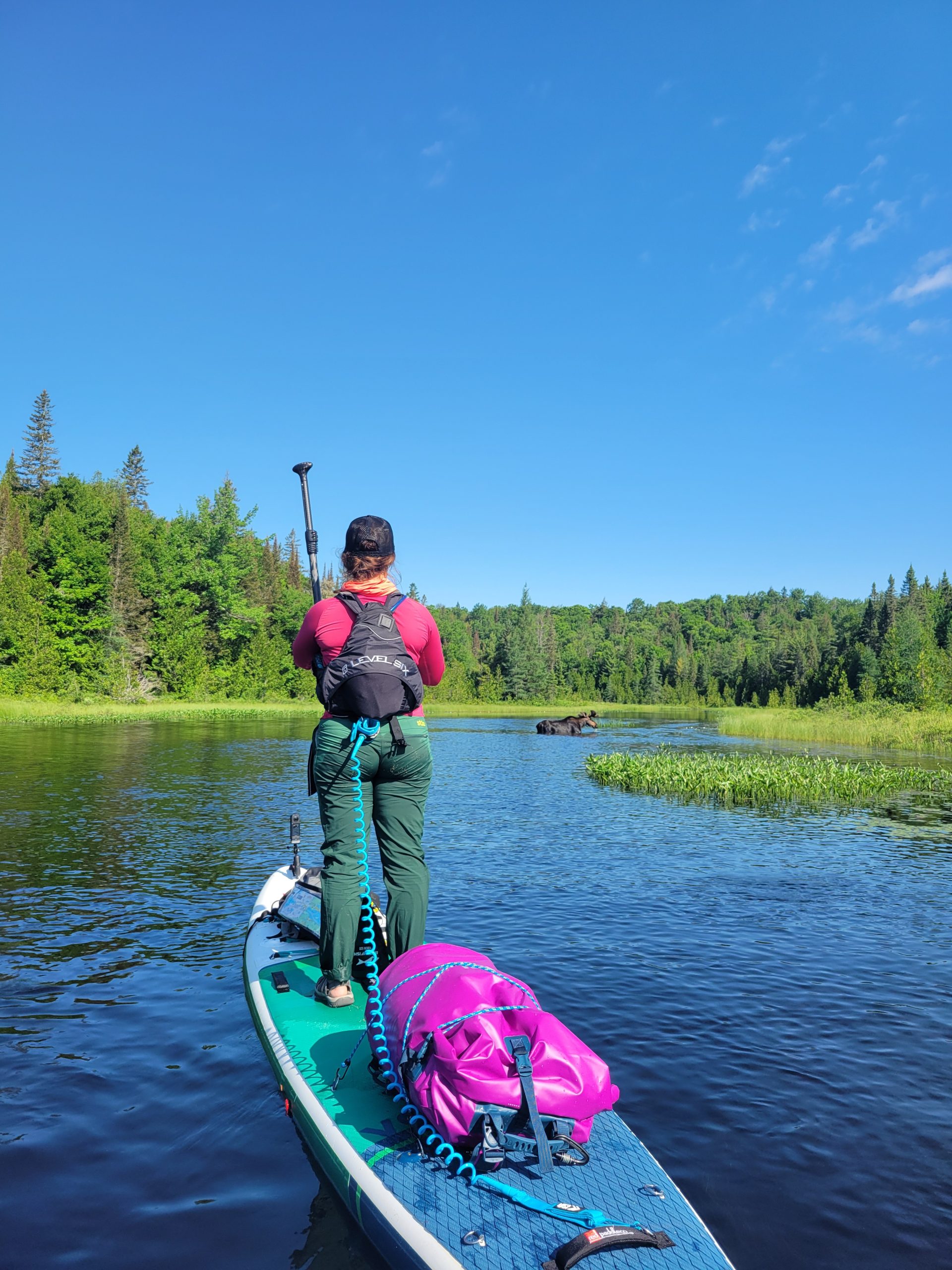
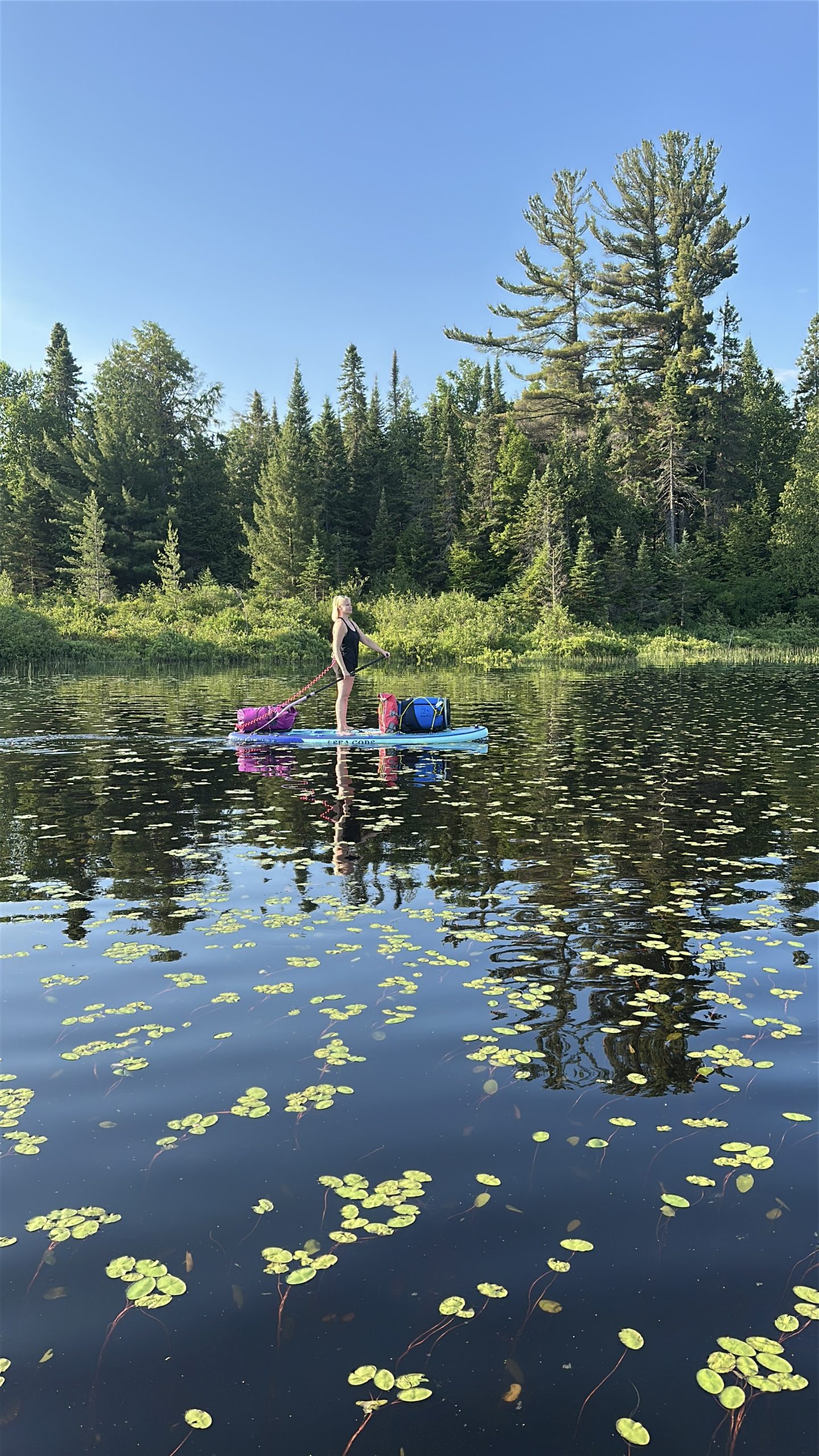
Unlike a canoe or kayak, nothing goes inside your board, so your gear is fully exposed. Dry bags are essential, and solid straps or carabiners are key to keeping everything secure.
When loading your board, keep the center of gravity low for better balance and use both front and rear tie-downs for even weight distribution.
I use the 60L Red Equipment Duffel Bag or Roll Top for most of my gear and a waterproof backpack up front for snacks and quick-access items. And in the Canadian backcountry, I use a classic bear barrel with a harness. With the harness straps down, it surprisingly lies well on a paddle board. Alternatively, you can use a bear canister or bag and put it in your large dry bag.
If you are portaging, it’s important that all your bags have solid backpack straps.
Pro tip: don’t rely only on the built-in bungees. Bring your own straps or bungees. I like using bungee cords because they make it quicker to load and unload gear during portages.
4. SUPs Make Swimming and Camp Life Easier
One unexpected perk? Paddle boards make it incredibly easy to hop in the lake. Whether it’s a hot day paddle or a peaceful morning, your board doubles as a floating dock.
I’ve stayed at sites with shallow, murky shorelines full of leeches; being able to paddle out for a dip or to fill up my water filtration system away from shore is a total game-changer.

5. It Was Way Easier Than I Expected
I’ve taken trips with people who were beginner paddlers or totally new to backcountry camping, and they did great.
Even with a fully loaded board, I don’t feel off-balance or sluggish. My first trip felt way more accessible than I expected. If you’re comfortable on a board and have the right gear, you can absolutely do this.
And remember, you can always kneel or sit to paddle if conditions get rough. Never paddle in conditions or distances outside your abilities.
What I Pack (Beyond the Usual Backcountry Gear)
In addition to essentials like food, sun and bug protection, kitchen supplies, a first aid kit, and sleep setup, I always bring:
- Extra bungees or rope
- Waterproof bags with backpack straps (for easier portaging)
- Foam vest PFD with whistle
- Throw bag or towing system
- Extra paddle
- Repair kit (glue or adhesive patch. enough to get you home)
- Pump (to re-inflate or top up your board)
- Extra fin (I bring a short river fin in addition to my touring one)
- GPS/satellite communication device
- Map in a clear waterproof case
- Waterproof Camera. Blog post: Capturing Content on a Paddle Board)
Check out my Amazon Store for other Paddle Boarding Essentials and Accessories.
Or check out my Products & Deals page for discounts.

Some of the Best Parts of Backcountry Camping on a Paddle Board
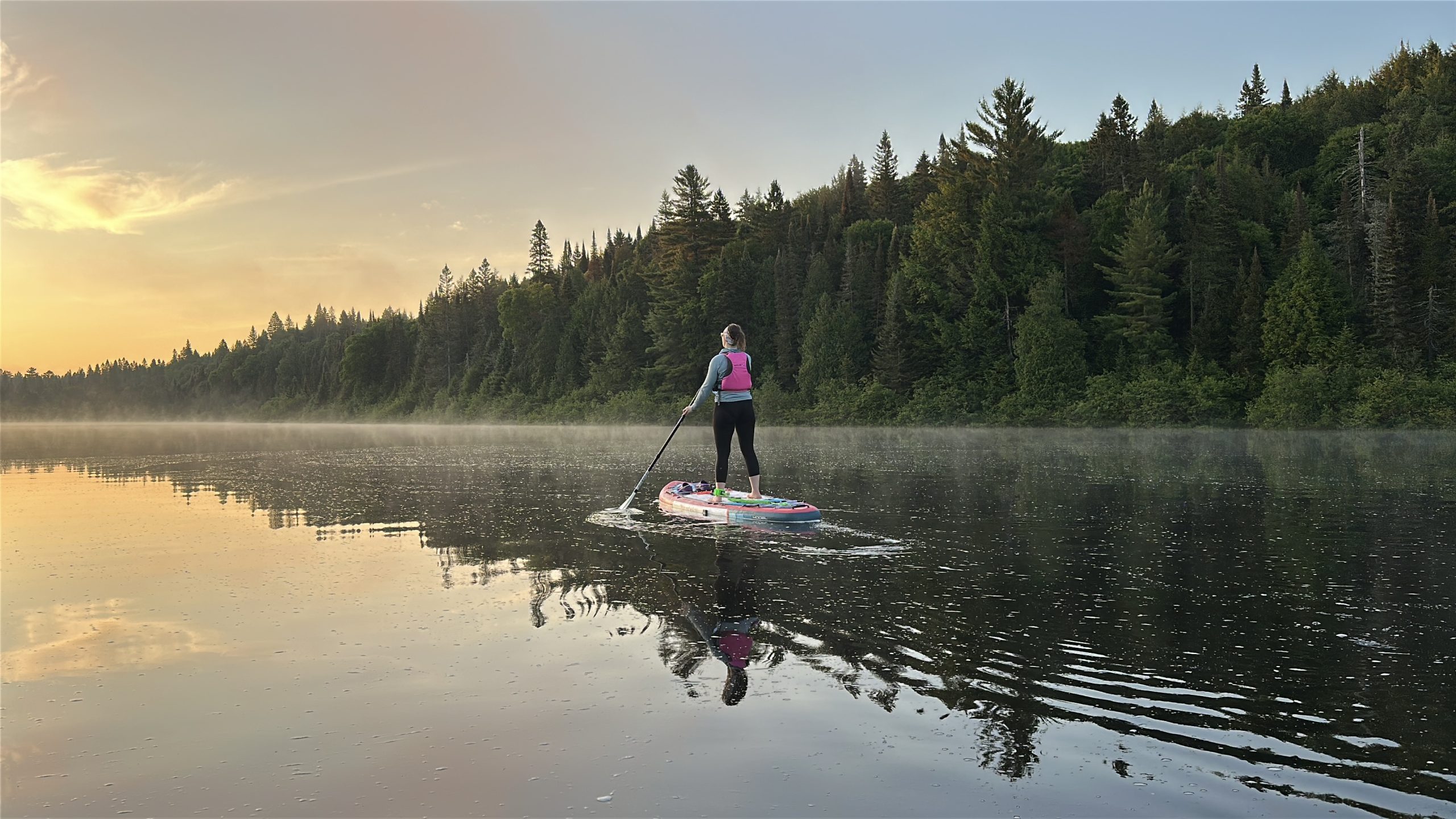
- I’m using gear I already own, no need to rent a canoe or haul one onto my car. I can launch from wherever makes the most sense for my route.
- It’s a new challenge and a different way to experience the backcountry. I often get curious looks or questions from canoe trippers on multi-day routes.
- It’s empowering. On a paddle board, it’s just you and your gear. You’ll probably need to do two trips on portages (I’ve never done a long one in a single go), but that’s part of the reward; you’re doing the work and reminding yourself what you’re capable of.
- I’ve met great people through this adventure style, and it continues to open up new ways to explore the outdoors. It might not be the most common way to travel but maybe that’s exactly why it’s worth trying.
A Few Things to Be Aware Of
- Wind matters more when you’re standing. Make sure you’re confident in different conditions and practice adjusting your stance for kneeling when it gets choppy. How to Read the Wind for Paddle Boarding.
- Water splash isn’t a problem. Unlike in a canoe, it’s okay if water washes over your board. As long as your gear is waterproofed and tied down, you’ll stay afloat and dry.
- You can’t rely on others. Everyone paddles their own board. Being able to carry your own load is part of the deal, but it’s also part of the pride.
As always, don’t paddle beyond your skill level. Practice your skills, test your gear, and plan for unexpected situations.
Planning your own adventure or looking for personalized guidance?
I offer one-on-one Paddle Adventurer consultation sessions that cover paddling, backcountry trip planning, travel, content creation and more. Explore consultation sessions →
FAQ
Do I need experience to try this?
Paddle boarding experience definitely helps, but you don’t need to be an expert. Start small, stay within your limits, and test your gear on day trips first.
How do I choose a good route for backcountry paddle boarding?
Look for paddling distances within your ability (better to start shorter and build from there), minimal or short portages, and lakes that are sheltered from the wind. Beginner-friendly canoe routes often make great intermediate SUP routes.
How do you carry your board and gear during a portage?
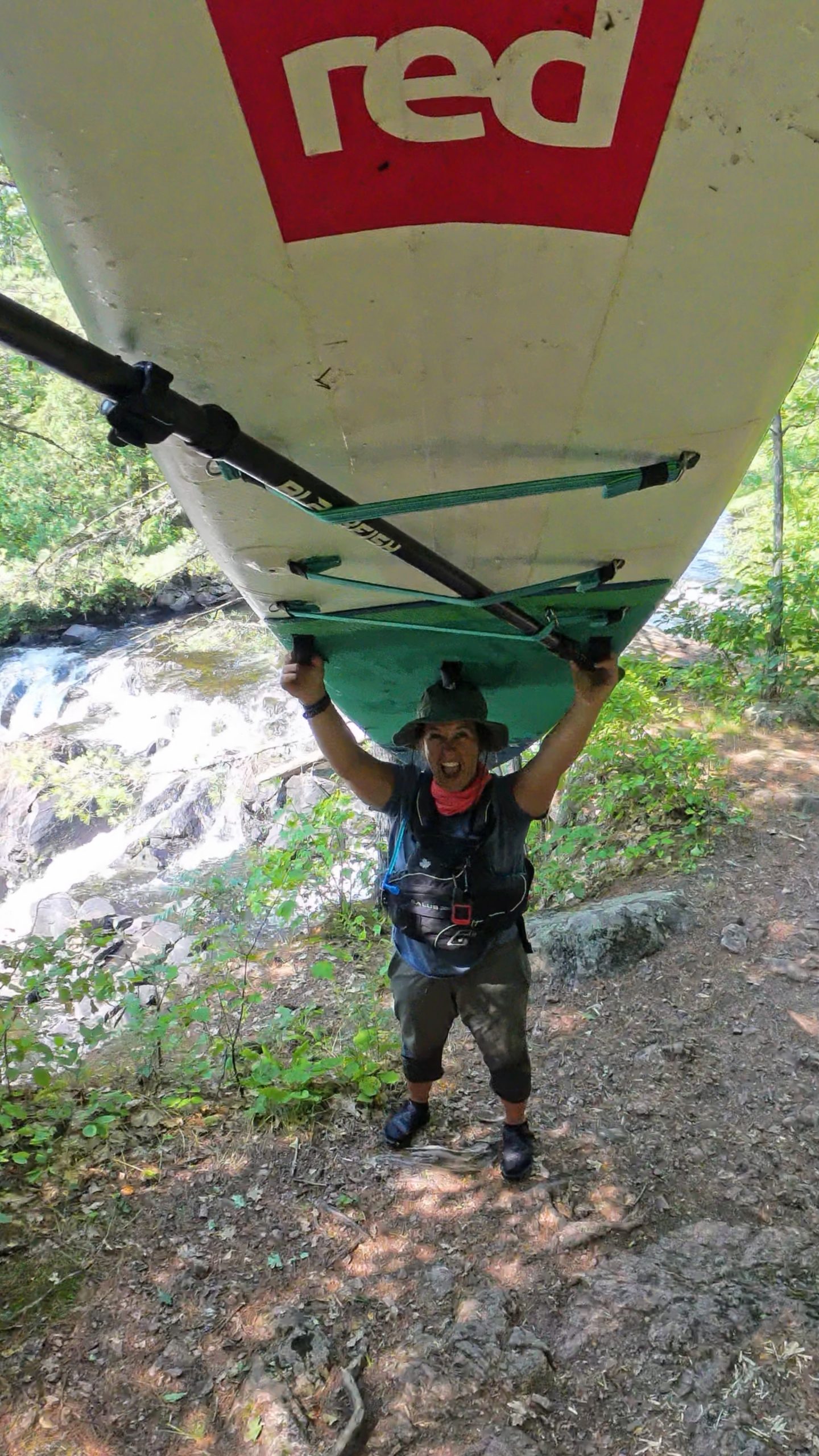
I usually carry my board first, balancing it overhead like a canoe, then return for my gear, which I carry in a backpack-style dry bag.
How do you launch with all your gear already on the board?
If the water is shallow, I walk the board in just far enough to float it, then slide the fins in deeper to avoid getting stuck. If the shoreline drops off quickly, I keep the board parallel to shore so it’s easier to load and balance before pushing off. From there, I hop on or push away slowly, same as usual, just with a bit more care since everything’s fully loaded.
What season is best for SUP camping?
Late spring through early fall, depending on your comfort level with bugs and the temperature of the water. Always check wind and weather conditions before heading out.
Is it challenging to balance and paddle with all the gear?
If your board is sized right for your total weight and your gear is evenly distributed, it doesn’t feel much less stable than paddling without gear. Heavier loads require a bit more paddling effort, but it’s very manageable. The only time it gets tricky is if your fin catches sunken weeds or lily pads, it can drag and slow you down.
Interested and want to join me on a guided, turn-key backcountry SUP adventure?
Subscribe to my blog to be the first to know about future trips and events and check out current trips.
You May Also Like

Cleaning Your Paddle Board
Budget Friendly Paddle Boarding Gifts